

California is not just a state on the map of the United States. It’s a place where nature seems to showcase everything it’s capable of: ocean coastlines stretching into endless horizons, mountain peaks rising into the clouds, scorching deserts, forests of giant trees, and waterfalls that quite literally take your breath away. The landscapes change so quickly that it sometimes feels like you’re traveling between different countries, not driving through a single state.
This is exactly why travelers love California. For the sense of freedom, for the roads that become part of the journey themselves, and for the chance to see more in a single day than you might in an entire week in some countries. But this is also where the main challenge lies.
Here’s the catch: because of the state’s size and the diversity of its landscapes, a trip can easily turn into a race to “see it all”. You want to visit the mountains, the ocean, the desert, and the national parks all at once. As a result, the itinerary becomes overloaded, long drives pile up, fatigue sets in — and instead of vivid эмоции, you’re left with a sense of rushing.
California doesn’t like haste. It’s impossible to “check it off” in one trip or experience it at full speed. What matters here is not the number of places on your map, but how you experience them: spontaneous stops, morning fog over the ocean, sunsets in the mountains, silence among giant trees.
That’s why a good itinerary isn’t just a list of sights — it’s a thoughtfully crafted travel story, where each location complements the previous one, and the road itself becomes part of the experience.
In this article, you’ll find 15 truly beautiful natural places in California worth seeing. And most importantly — they can be combined into a logical, comfortable route, so you don’t just see them, but truly experience this remarkable part of the world.

California is home to the tallest, the largest, and some of the oldest trees in the world — all in one state. These include Hyperion (the tallest tree), General Sherman (the largest by volume), and ancient pines over 4,000 years old.
How California Became a Natural 'Constructor' of Different Worlds
There are places where the landscape changes gradually. And then there’s California — where in a single day you can experience several “natural scenarios” at once. In the morning — a холодный ocean and fog, by midday — pine forests scented with resin, toward evening — mountain passes, and at night — the dry, warm desert air and a sky filled with stars.
This isn’t a coincidence or a lucky accident. California is one of the rare regions on the planet where several powerful natural forces converge in one place and begin to “work together,” creating that striking contrast of landscapes.
Let’s break down how it works — without boring geography, but with a clear understanding of why you see these exact landscapes.
- 01. The Ocean That “Shapes” the Climate
The first factor that defines California is the Pacific Ocean. Not just as a beautiful horizon line, but as a full participant in natural processes. Along the coast runs the cold California Current. It cools the air and creates the famous coastal fog. That’s why even in summer, the shoreline can feel fresh and cool, while just a few kilometers inland it’s already hot. This contrast is physically noticeable:
- By the water — humid, dense air;
- A bit further — dry and warm;
- Even further — hot.
The ocean acts as a natural “regulator,” preventing extreme temperatures along the coast while amplifying contrasts inland.
- 02. Mountains That Divide the World into “Before” and “After”
The next key element is mountain ranges. The most famous is the Sierra Nevada. In California, mountains are not just scenic — they literally divide the climate into two different realities. Here’s how it works:
- Moist ocean air rises along the slopes;
- It cools and turns into precipitation (rain or snow);
- It releases its moisture on the western side.
And then things get interesting. As the air crosses the mountains and descends, it becomes dry and warm. As a result: on one side — forests, rivers and waterfalls, on the other — semi-deserts and deserts. That’s why places like Yosemite coexist with extremely dry regions such as Death Valley. This phenomenon is called a “rain shadow,” and in California it’s especially pronounced.
- 03. Tectonics: Land That Is Still Moving
California sits on the boundary of tectonic plates. The most famous fault is San Andreas. It’s not only the cause of earthquakes but also a force that has shaped the landscape over millions of years — lifting mountains, forming valleys, and breaking the terrain into a diverse, uneven relief.
Because of this, California never feels “flat.” Even the roads often follow complex terrain, constantly changing perspective. Sometimes tectonics explains why you can find cliffs, plains, and canyons all within the same route. - 04. Climate Zones That Shift Like Scenes
California stretches over more than 1,200 kilometers from north to south — almost like traveling across several European countries. That’s why it contains multiple climates:
- Mediterranean (mild with dry summers);
- Alpine (in the mountains);
- Desert (in the south and inland);
- Marine (along the coast).
What’s most unusual is that these zones don’t have strict borders — they flow into one another. You can start your day in cool fog, drive under bright sun a few hours later, and by evening find yourself in a place where the temperature is 15–20 degrees higher.
- 05. Why the Vegetation and Landscapes Are So Different
Because of this climatic “mix,” California is home to a wide variety of ecosystems. Here you’ll find:
- Sequoias — giants that require moisture and cool air;
- Pine forests — in the mountains;
- Shrubs and grasses — in dry regions;
- Cacti and desert plants — where water is scarce.
Sometimes a couple of hours on the road is enough to see not only the landscape change, but the entire “logic of nature” shift.
- 06. An Often Overlooked Detail
California is not only about diversity, but also about contrasts in time. For example:
- In spring, deserts can burst into bloom;
- In summer, mountains remain cool;
- In autumn, the coast is often at its warmest;
- In winter, you can ski and drive to the ocean on the same day.
So it’s not just geography — it’s also seasonality. The same place can look completely different depending on the time of year.
At first glance, this diversity may seem like just a bonus. But in reality, it directly affects your experience. If you don’t take these factors into account:
- You might end up in fog instead of the views you expected;
- Find yourself in extreme heat without preparation;
- Miss the season when a place looks its best.
But if you do take them into account, your route starts to “work,” the drives become part of the experience, and the journey feels complete.
California is not one place, but several worlds combined into a single state. The ocean sets the rhythm, the mountains divide the space, tectonics shape the terrain, and the climate turns it all into an ever-changing picture. That’s why traveling here is not just about “where to go,” but about “how to build the journey.” Because in California, what matters is not only the destinations, but everything that happens in between.
Yosemite: A Place Where You Truly Grasp the Scale of Nature
There are places that look beautiful in photos. And then there is Yosemite — a place where photos fall short. Because they fail to capture the most important thing: the sense of scale.
When you first enter the valley, there’s an almost physical feeling that everything around you is too vast to fully grasp. Cliffs rise like walls, waterfalls drop from heights that are hard to comprehend at first, and trees seem like mere background against the massive granite.
- 01. What Yosemite Really Looks Like
Yosemite is not just a single park, but a vast area with different zones. Its heart, however, is Yosemite Valley — a valley shaped by glaciers thousands of years ago. This is where the most iconic views are concentrated:
- Vertical granite cliffs;
- A wide valley with meadows;
- The Merced River flowing calmly through it all.
Interestingly, it was the glaciers that “carved” this valley, giving it its smooth forms while also creating dramatic elevation changes.
- 02. Cliffs That Became Icons
Yosemite has places that are recognizable even to those who have never been to California.
- El Capitan
A monolithic granite wall nearly a kilometer high. It looks like a perfectly vertical surface and attracts climbers from all over the world. It’s especially striking at sunset, when it changes color. Even if you’re not into climbing, standing at its base is a powerful experience. There’s a strange feeling of silence and tension at the same time, as if the rock itself presses down with its presence. - Half Dome
One of the most unusual natural formations. It looks like a mountain sliced in half: one side smooth and rounded, the other almost vertical. Reaching the summit is a serious challenge, but even from afar it leaves a lasting impression.
- 03. Waterfalls That Set the Mood
Yosemite is impossible to imagine without water. In spring, when the mountain snow melts, the waterfalls become especially powerful — and this is when the park truly “sounds.” Yes, sounds.
- Yosemite Falls
One of the tallest waterfalls in North America, rising over 700 meters. It consists of several cascades and in spring turns into a roaring поток. Sometimes the wind lifts the spray upward, making it seem as if the waterfall is flowing back into the sky.
- 04. Forests and Unexpected Silence
Against the backdrop of cliffs, it’s easy to forget that Yosemite is also a forest. Pines, cedars, and oaks grow here. And if you step away from the popular viewpoints, you can find yourself in a completely different atmosphere: soft light filtering through branches, the scent of pine, and near-total silence. It’s a rare place where dramatic views and deeply peaceful, almost meditative spaces coexist. - 05. How Yosemite Changes with the Seasons
Yosemite is not a one-time destination. It looks different in every season.
- Spring — maximum water, powerful waterfalls, vibrant greenery.
- Summer — access to most trails, warm weather, more visitors.
- Autumn — calm atmosphere, soft light, fewer crowds.
- Winter — snow, almost fairy-tale scenery, a completely different rhythm.
If you want to see Yosemite at its most powerful — choose spring. If you prefer quiet — autumn.
- 06. Small Details That Make the Trip Special
Yosemite is not just about “points on the map.” Often, it’s the small moments that stay with you:
- How the cliffs change color at sunset;
- How morning fog slowly lifts from the valley;
- How quickly silence sets in once you leave the road;
- How the sound of water follows you almost everywhere.
Sometimes all it takes is to stop and not rush — and that’s when the feeling people come here for finally appears.
Yosemite may look compact on the map, but in reality:
- Distances are greater than they seem;
- Parking fills up quickly;
- Popular spots can get crowded.
That’s why it’s best to arrive early in the morning, plan your day in advance, and not try to see everything at once.
There are places you like. There are places that impress. And then there is Yosemite — a place that stays with you. Not because of a specific viewpoint or photograph, but because of the feeling of scale and silence at the same time. The moment when you realize how powerful nature can be — and how calm it can feel.
Big Sur: When the Road Becomes the Main Attraction
There are routes where the goal is simply to get from point A to point B. And then there is Big Sur — a place where the road itself is the destination.
Here, you don’t want to rush. Navigation becomes secondary, and your main task is simply to drive, stop, look around, and catch the moment. Because Big Sur is not a list of sights — it’s the feeling of moving along the edge of a continent.
- 01. What It Feels Like in Real Life
Imagine a narrow road that seems glued to the cliffs. On one side — steep drops where waves crash below. On the other — rolling hills covered in grass or forest. And it’s constantly changing:
- Every turn reveals a new view;
- The light shifts from soft to bright;
- Fog appears and disappears.
Sometimes it feels like you’re not driving a road, but moving through a cinematic set where every frame is already perfect for a film.
- 02. A Road That Demands Attention — and Rewards It
The highway through Big Sur (part of the famous Highway 1) is not one where you can relax and drift along. There are sharp turns, narrow stretches, and elevation changes. But that’s exactly what makes the drive feel alive. You stay engaged — and because of that, you feel everything around you more deeply.
Important: speed doesn’t make sense here. The slower you go, the more you see. - 03. The Bridge That Became a Symbol
Bixby Creek Bridge is one of the most recognizable bridges in the United States. Why it stands out:
- An elegant arch over a canyon;
- Open views of the ocean;
- A perfect photo spot.
But the real beauty is not just the bridge itself — it’s how it fits into the landscape. It doesn’t compete with nature; it feels like part of it.
- 04. A Waterfall That Breaks the Rules
McWay Falls is one of those places that makes you wonder: “How is this even possible?” A waterfall dropping directly onto a beach by the ocean is rare in itself. But what makes it even more interesting:
- The color of the water changes with the light;
- The surrounding cliffs create a nearly enclosed “stage”;
- The place feels almost unreal in its perfection.
Even if you’ve seen countless photos online, in real life it feels deeper and calmer.
- 05. The Best Stops Are the Ones Not on the Map
There’s a paradox in Big Sur: the most powerful impressions often have nothing to do with famous spots. Sometimes it’s:
- A small unnamed pullout;
- A viewpoint you randomly turned into;
- A stretch of road that just feels beautiful “right now.”
You stop, step out of the car — and realize this is exactly the moment you came for.
- 06. Fog Is Not a Problem — It’s Part of the Atmosphere
Many people worry that fog will “ruin” the trip. In reality — it does the opposite. In Big Sur, fog:
- Softens the light;
- Hides parts of the landscape;
- Adds depth to the views.
Sometimes cliffs seem to float in the air, and the ocean almost disappears. It creates a sense of space that’s hard to describe — you simply have to experience it.
- 07. When to Go to Catch the Right Mood
There’s no single “perfect” time for Big Sur — it’s different every time.
- Morning — fewer cars, soft light, higher chance of fog.
- Daytime — bright colors, clear views, more people.
- Sunset — warm light, long shadows, the most cinematic moment.
If you can — stretch the drive out. Don’t rush through Big Sur in a couple of hours.
- 08. The Mistake Almost Everyone Makes
The most common mistake is treating Big Sur as just a stretch of road between two cities. In reality:
- You miss stops;
- You don’t feel the rhythm;
- You leave with the sense that “something was there, but not fully experienced.”
The best approach is to dedicate a full day to Big Sur — or at least drive without rushing and without a strict schedule.
There is no single “main attraction” here like in national parks. There’s no fixed сценарий. That’s why Big Sur works differently. What stays with you is the feeling of the road, the changing light, the quiet moments between stops.
It’s not about “seeing” — it’s about “experiencing.” And perhaps that’s why, over time, people don’t remember specific locations, but the process itself — how they drove, where they stopped, what the air felt like, and the sound of the ocean somewhere far below.
Sequoias — Trees That Are Bigger Than You Expected
There are things you can’t truly imagine until you see them with your own eyes. The trees in Sequoia National Park are exactly like that.
You might know in advance that they reach dozens of meters in height, that they are thousands of years old, that they are the largest trees on the planet. But all of these facts remain just numbers — until the moment you stand next to them. And then something strange happens: your usual sense of scale stops working.
- 01. First Impressions That Are Hard to Explain
When you enter a grove of sequoias, at first it’s not immediately clear what feels unusual. It seems like a forest: trees, trails, silence. But after a few minutes, it hits you — the proportions are off.
- The trunks are too wide;
- The crowns are far too high;
- The spacing between trees feels unfamiliar.
You look up — and can’t see the tops. Simply because they’re somewhere far beyond your normal field of vision. In that moment, you start to feel smaller. Not metaphorically, but almost physically.
- 02. Why Sequoias Grow So Huge
Giant sequoias grow only under specific conditions, and California happens to provide the perfect environment. They need:
- A mild climate without extreme fluctuations;
- Sufficient moisture;
- Specific soil conditions;
- No extreme cold.
But there’s another crucial factor — time. Sequoias grow slowly, but almost never stop. They don’t rush to grow — they simply keep growing for centuries. And eventually, they become something that’s hard to compare with anything else in nature.
- 03. General Sherman Tree — A Scale That’s Hard to Comprehend
This is not the tallest tree in the world, but the largest by volume. To understand its scale:
- Height — about 83 meters;
- Base diameter — over 11 meters;
- Age — around 2,200 years.
But numbers don’t capture the essence. When you stand next to it, you can’t take it all in at once, photos fail to convey its size, and people nearby look like tiny dots.
An interesting detail: walking around the tree takes time — as if you’re circling a small house, not a living organism.
- 04. A Forest That Sounds Different
Sequoias change not only how things look, but also how they feel. Here:
- Sound becomes muted;
- The air feels denser;
- Your movements naturally slow down.
This is not a noisy forest. It doesn’t feel “alive” in the usual sense. Instead, it feels like a place with a very slow rhythm, where everything happens unhurriedly — as if time itself moves differently.
- 05. Fire as a Part of Survival
One of the most surprising facts: sequoias don’t just survive fires — they actually depend on them.
- Their bark is extremely thick and protects them from fire;
- Their cones open under high temperatures;
- Fire clears the soil from competing plants.
So what seems destructive actually helps sequoias regenerate and continue growing. It’s one of the rare cases in nature where destruction is part of the life cycle.
- 06. Why Photos Don’t Capture Reality
Sequoias are one of those things that simply don’t “fit” into a frame. The reasons are simple:
- Cameras can’t convey their height;
- There are no familiar reference points for scale;
- Perspective distorts their true size.
You can take dozens of photos — and none of them will reflect what it feels like to stand beside them.
- 07. Best Time to Visit
Sequoias are accessible year-round, but the experience changes with the seasons.
- Spring and summer — comfortable temperatures, lush greenery, accessible trails.
- Autumn — fewer visitors, calmer atmosphere.
- Winter — snow-covered branches, almost fairy-tale scenery, a unique silence.
In winter, sequoias look especially striking — the contrast between dark bark and white snow enhances the sense of scale.
Don’t rush. The most common mistake is to walk the main trails, take a few photos, and leave. Try something different: stop, lean against a trunk, look up — and stay there for a while.
After a few minutes, a feeling emerges — the very reason people come here. Not a quick “wow effect,” but something deeper: a quiet realization of how much larger nature is than we are.
Sequoias don’t impress through яркость or spectacle. They don’t try to entertain or amaze. They simply exist — massive, ancient, calm. And that’s exactly what makes them special. You may forget the details of your route, but that sense of scale — the moment you stand there and realize how vast everything is — stays with you for a long time.
Lake Tahoe: Where California Suddenly Turns into the Alps
When people imagine California, they usually think of the ocean, palm trees, and surfing. But as soon as you head into the mountains, the picture changes completely.
Lake Tahoe is that exact moment when expectations don’t match reality. Instead of heat — crisp mountain air. Instead of crowded beaches — clear water and pine forests. Instead of noise — a sense of space and calm.
This is not just a beautiful lake. It’s a complete mountain world with its own rhythm, atmosphere, and seasonal life.
- 01. Water That Looks Unreal
The first thing that strikes you at Tahoe is the color of the water. It’s almost glass-clear, shifting from light turquoise to deep blue, reflecting the sky and mountains so perfectly that it’s sometimes hard to tell where reality ends.
The lake is over 500 meters deep and is one of the clearest in the United States. Standing on the shore, you can sometimes see the bottom dropping away for dozens of meters — a rare feeling even for experienced travelers. - 02. Summer: A Calm That Draws You In
In the warmer months, Tahoe becomes an ideal place to enjoy nature without the overload. It doesn’t feel like a typical “resort.” Everything here is more relaxed and natural. What people do in summer:
- Swim in cool, refreshing water;
- Hike mountain trails;
- Kayak and boat on the lake;
- Have picnics with a view.
Often, the most valuable experience is simple: sitting by the water, looking at the mountains, and not rushing anywhere.
- 03. Trails That Reveal a Different Tahoe
Step away from the shoreline, and a new story begins. Around the lake, there are dozens of trails:
- Through pine forests;
- Leading to panoramic viewpoints;
- Along ridges and rocky slopes.
From above, Tahoe looks even more impressive. The lake becomes a vast mirror surrounded by mountains. One of the best ways to truly feel this place is to gain a bit of elevation.
- 04. Winter: The “Alpine” Scenario
With the arrival of winter, Tahoe completely changes its character. Snow covers the trees, mountain slopes, and the lake’s shores. Suddenly, it feels like you’re somewhere in Europe, not California. In winter:
- People ski and snowboard;
- Walk along snow-covered trails;
- Enjoy the contrast of white snow and deep blue water.
One unique feature of Tahoe is that the lake rarely freezes completely, making this contrast especially striking.
- 05. Light That Changes Everything
At Tahoe, it’s not only about what you see, but when you see it. Light plays a key role:
- Morning — still water, soft tones, almost complete silence.
- Daytime — bright colors, sharp lines, deep blue hues.
- Sunset — warm light, reflections, a calm, almost meditative atmosphere.
The same place can look completely different depending on the time of day.
- 06. Small Details That Make It Special
Tahoe is not only about panoramic views. It’s also about the little things that create the feeling:
- The scent of sun-warmed pine in summer;
- The sound of water along a rocky shore;
- A light breeze coming off the lake;
- The crunch of snow in winter.
These details make the place feel alive, not just beautiful.
Tahoe may feel calm, but it’s quite large. Distances around the lake are significant, drives can take longer than expected, and mountain weather changes quickly. That’s why it’s best not to overload your itinerary, leave time for stops, and consider the season.
Some places impress you instantly. Others reveal themselves slowly.
Lake Tahoe is the latter.
First, you notice the water. Then the mountains. Then the silence. And only after some time do you realize that what matters most here is not the views themselves, but the state of mind you fall into. Calm, steady, unhurried. The kind of feeling that’s hard to recreate in everyday life — and exactly why you’ll want to come back.
Death Valley: Where Nature Pushes Everything to the Limit — and It’s Mesmerizing
The name sounds harsh — and for good reason. This is one of the most extreme places not only in the United States, but on the entire planet. There is almost no water, temperatures can go far beyond what feels comfortable, and the landscapes look like something from another world.
And yet, travelers from all over the globe come here. Because Death Valley is a rare example of how harsh conditions can create a truly unique kind of beauty.
- 01. The First Feeling: Silence and Space
When you arrive in Death Valley, the first thing you notice is not the heat — it’s the scale.
- The horizon feels endless;
- There are no familiar reference points;
- The space feels “empty,” but never dull.
There are no dense forests or vibrant colors here. Instead — minimalism. And that’s exactly what makes every detail stand out. Interestingly, due to the dry air and lack of humidity, distances feel deceptive: objects may appear closer than they actually are.
- 02. Salt Flats: A Landscape Unlike Anything Else
One of the most striking places is the Badwater Basin salt flat.
- A white surface stretches endlessly toward the horizon;
- Under your feet — hardened salt cracked into geometric patterns;
- Mountains around you look almost painted.
This place feels surreal. Badwater is the lowest point in North America — 86 meters below sea level. Standing here, you get a strange sensation: no sound, no movement — just light, air, and space.
- 03. Heat That Feels Different
Death Valley is known as the hottest place in North America — and that’s true. Temperatures can exceed +50°C. But there’s an important detail: the heat here is “dry.” This means:
- No sticky ощущения;
- Sweat evaporates almost instantly;
- Your body can overheat without you noticing.
That’s why visiting in summer without preparation is not recommended. This isn’t a place where you can simply “push through.” The best time to visit is late fall, winter, or early spring.
- 04. Sunsets That Redefine Color
During the day, Death Valley can seem almost monochrome. But everything changes toward evening. As the sun begins to set:
- Mountains turn shades of red, orange, and pink;
- Shadows grow longer and deeper;
- The light becomes soft and warm.
At this moment, the landscape comes alive and gains depth. Many travelers say sunsets are the most powerful part of the experience.
- 05. Moving Stones: A Long-Standing Mystery
One of the strangest phenomena here is the “moving rocks” at Racetrack Playa. It looks like this:
- Rocks sit on the flat surface;
- Long trails stretch behind them;
- But there’s no visible force moving them.
For years, this was a mystery. Today, scientists believe the explanation lies in thin layers of ice forming overnight. As it melts, light winds slowly push the rocks across the slick surface. Even knowing this, seeing the trails in person still feels surreal.
- 06. Landscapes That Constantly Change
Despite its “empty” appearance, Death Valley is surprisingly diverse. You’ll find sand dunes, canyons, colorful hills, and salt flats — each area with its own character. For example, Zabriskie Point is famous for its wave-like formations, especially beautiful at sunrise. - 07. A Night Sky You Won’t Forget
With almost no cities or artificial light nearby, Death Valley is one of the best places for stargazing. At night, the sky turns incredibly dark, revealing thousands of stars. The Milky Way becomes clearly visible. It’s the kind of place where you just lie down and look up. - 08. Important Things to Keep in Mind
Death Valley is not the easiest place to visit. It’s important to remember:
- Gas stations are far apart;
- Cell service can be unreliable or nonexistent;
- Temperatures can shift quickly;
- Water is essential.
Plan your route in advance, bring extra water, and avoid overloading your itinerary.
Death Valley is not about comfort or “easy” beauty. It’s about extremes. About being in a place where nature does not adapt to humans.
And that’s exactly where its power lies. There are no distractions — only form, light, and space. And perhaps that’s why the experience stays with you: because it feels unlike anything else.
Joshua Tree: A Desert Where Silence Becomes the Main Experience
There are places that impress with scale. Others — with vibrant colors. And then there is Joshua Tree — a desert that works in a completely different way.
There’s no classic “postcard view” here. At first glance, it feels dry, empty, even a little strange. But give it a bit of time, and you start noticing the details. Then, almost unexpectedly, you realize you don’t want to leave. Joshua Tree doesn’t try to impress you instantly — it unfolds slowly.
- 01. Trees That Don’t Feel Real
The park’s main symbol is the Joshua tree itself. They grow in all directions, выглядят будто «сломаны» или скручены, completely lacking symmetry. Sometimes they don’t even feel like plants — more like abstract sculptures.
Fun fact: the name comes from Mormon settlers, who saw in the branches a figure resembling a person with raised arms — like the biblical Joshua. Each tree is unique. No two are alike. And that’s exactly what gives the landscape its almost alien quality. - 02. Rocks That Look Hand-Placed
Beyond the trees, Joshua Tree is known for its rock formations: massive boulders, stacked piles, shapes that don’t quite look natural. Sometimes it feels like someone carefully arranged them — they just sit too “perfectly.”
In reality, this is the result of millions of years of weathering and erosion. Still, the feeling remains: as if nature experimented a little here. - 03. A Silence You Can Almost Hear
Joshua Tree has a very specific kind of silence. Not the kind you find in forests or mountains. Here, it feels deeper.
- No sound of water;
- Almost no wind;
- Sounds don’t echo.
It can feel like sound simply dissolves in the air. And in that moment, you start noticing everything else: your steps, your breathing, even your thoughts. It’s a rare state where the place doesn’t distract you — it slows you down.
- 04. Light That Brings the Landscape to Life
During the day, the desert may seem uniform. But as the sun begins to drop, everything changes. Sunset in Joshua Tree:
- Rocks turn golden;
- Shadows stretch longer;
- The trees look even more surreal.
Light here doesn’t just illuminate — it shapes the space. The same area can feel like two completely different places depending on the time of day.
- 05. A Night Sky Worth Staying For
Joshua Tree is one of the best places in California for stargazing. The reasons are simple: minimal light pollution, dry air, and wide-open horizons.
At night, thousands of stars become visible, and the Milky Way stands out clearly. It’s the kind of place where you just lie down and look up. - 06. Why Photographers Love It
Joshua Tree is often called “photogenic,” but it’s not just about visuals. It offers unusual shapes, strong contrasts of light and shadow, and a real sense of space. But more importantly — it creates a mood. Photos from here often capture not just what you see, but how it feels. - 07. When to Visit
The desert sets its own rules. The best time to visit is fall, winter, and early spring. During these seasons, temperatures are comfortable, the light is softer, and walking is enjoyable. In summer, the heat becomes intense, making exploration much harder. - 08. A Small Tip That Changes Everything
Don’t just stay in your car. Even a short walk completely changes your perception. It gives you a sense of scale and lets you actually feel the space. Try stepping away from the road for just 10–15 minutes — and you’ll see Joshua Tree differently.
This isn’t a place that impresses in the usual way. It’s not overloaded with details, and it doesn’t try to amaze you at every step. But precisely because of that:
- It stays with you;
- It lingers in your thoughts;
- It makes you want to return.
Joshua Tree is about a state of mind. About silence, space, and a strange, almost unexplainable harmony among rocks and dry earth.
McWay Falls: The Waterfall That Plunges Straight into the Ocean
Among all the natural wonders of California, there are places that instantly capture your attention. McWay Falls is one of them. This is not just a waterfall — it feels like a perfectly staged scene, where mountain water, cliffs, and the океан come together as if nature itself created an open-air studio.
And if you think you’ve seen many waterfalls before, be prepared — this one is different. McWay Falls drops directly onto a sandy beach that meets the Pacific Ocean, creating a rare moment where a mountain stream merges with the sea.
- 01. The First Encounter
You drive along the winding road of Big Sur, and suddenly — the view opens up: water flowing off the edge of a cliff straight into the океан. What stands out immediately:
- The water falls from about 24 meters;
- The поток is gentle, yet steady;
- The water shimmers in clear blue and green tones.
Even if you’ve seen countless waterfalls, this combination is rare. Interesting fact: McWay Falls is one of the very few waterfalls in the United States that flows directly into the ocean. Most waterfalls end in rivers or lakes.
- 02. The Beach and Cliffs: Space for the Eyes
The beach beneath the waterfall is mostly inaccessible on foot, which adds to its untouched feeling.
- The sand is light, almost white;
- The surrounding cliffs form a natural amphitheater;
- The ocean constantly shifts from turquoise to deep blue.
The place balances calm and movement: water falling, waves crashing, wind moving through the air.
- 03. Light That Turns It Into a Painting
McWay Falls is the perfect place to observe how light transforms a landscape.
- Morning — soft golden light, sometimes a light mist wraps around the cliffs, the water looks even clearer.
- Daytime — bright sunlight enhances the turquoise tones, the ocean turns a насыщенный deep blue, and contrasts become sharper.
- Sunset — cliffs and water glow in pink and orange hues, shadows add depth, and the atmosphere feels almost magical.
Each time of day reveals a different version of the same place.
- 04. Why It’s So Photogenic
McWay Falls is often featured in travel guides, and it’s easy to see why:
- The unusual way the water falls;
- The combination of mountains, beach, and ocean;
- The interplay of light and shadow;
- A strong sense of scale — the waterfall feels like a continuation of the landscape itself.
But photos only capture part of the experience. In reality, it’s deeper — the sound, the воздух, the movement of water, the wind.
- 05. Small Visiting Tips
To truly experience McWay Falls:
- Don’t rush — find a viewpoint and stay for a few minutes;
- If possible, visit at different times of day to see how the light changes;
- Try to listen, not just look — the sound of water and the ocean creates a unique atmosphere.
Despite its accessibility, the place still feels untouched, partly because access to the beach is restricted, preserving the natural scene.
This waterfall is not just about “beauty in a frame.” It’s about:
- A sense of scale and space;
- The harmony of water, cliffs, and ocean;
- A moment you want to remember.
Even if you’ve seen dozens of waterfalls and coastlines, McWay Falls leaves a distinct impression. It combines the сила of a mountain stream with the calm of the ocean, creating a scene that’s hard to forget.
And that’s why everyone who comes here leaves with a certain feeling — as if they’ve witnessed a place where nature itself directs the scene for your memories.
Shasta: The Sleeping Volcano That Breathes Legends
When you think of California, volcanoes don’t usually come to mind. But Mount Shasta is an exception. A dormant volcano that seems calm, yet holds immense power and character. Every element of its landscape tells a story, from snow-capped peaks to the soft alpine meadows below.
Shasta is more than just a mountain. It’s an entire world where nature displays both grandeur and subtlety, where the air is so pure that every breath feels special, and the views seem taken from postcards, yet in reality are even more breathtaking.
- 01. First impression: scale and silence
As you approach Shasta, the first thing you notice is its peak — a perfectly conical silhouette visible for miles. The immediate sensations include:
- The horizon expands;
- The air becomes cleaner and cooler;
- You feel as if you are standing at the base of something ancient and significant.
Interesting fact: Shasta is considered a dormant volcano, but its glaciers and snowcaps give the peak an alpine appearance, as if you’ve stepped into a different climate zone.
- 02. Alpine meadows: a contrast to the volcano
On Shasta’s slopes lie soft meadows, blooming with colorful flowers in summer.
- Grasses sway in the wind;
- Small streams appear;
- Birds and butterflies enliven the area.
This contrast — green meadows against the massive volcano — makes the place unique. You literally feel the scenery change, transitioning from power to tranquility.
- 03. Glaciers and snowfields: eternal coolness
Glaciers remain at Shasta’s summit, not melting even in summer.
- The glacier surface glistens in the sunlight;
- Sometimes blue crevasses are visible;
- The snow reflects light, creating an almost magical sparkle.
Fun fact: climbers say the snow on Shasta feels different — denser, colder, and softer at the same time, as if nature preserved a piece of eternal winter here.
- 04. Panoramas that open from the summit
Even reaching partway up Shasta (not necessarily to the very peak) offers views that are hard to forget:
- Below — alpine meadows and forests;
- Further — lakes and rivers winding through the valleys;
- On the horizon — other mountain ranges and an endless sky.
Every turn of the trail changes your perspective, revealing new details. Even experienced hikers note that you could spend a whole day on Shasta and see something new each time.
- The summit is considered sacred;
- There are said to be unusual energy points;
- Many visit not only for the views but also for a sense of special power.
This gives the place a magical quality — a feeling that you are standing not just on a mountain, but on the threshold between the real and the mystical.
- 06. Best time to visit
Depending on the season, Shasta offers different experiences:
- Spring and summer — mild climate on the slopes, blooming meadows, light snow at the summit.
- Autumn — contrast of golden meadows and dark rocks, fewer tourists, perfect for photography.
- Winter — the summit is fully snow-covered, glaciers become more prominent, creating an alpine expedition feel.
Keep in mind that it’s colder at the summit than below, and weather can change rapidly.
- 07. Shasta’s little secrets
- Early morning light is soft and highlights the volcano’s forms;
- On some trails, you may encounter rare wildlife;
- Even a short walk reveals panoramas that can’t be captured in photos.
Shasta is a place where it’s important not to rush, but to enjoy each step and every glance.
Unlike beaches or popular waterfalls, Shasta doesn’t shout “look at me.” It gradually reveals its character: silence and scale, glaciers and meadows, legends and a sense of power. And that’s why everyone who visits Shasta leaves with the feeling that they didn’t just see a mountain, but an entire world filled with beauty and history.
Lassen: The Park Where the Earth Literally Breathes
When you think of volcanoes and geysers, Yellowstone or Iceland usually come to mind. But California has its own quiet yet equally impressive gem — Lassen Volcanic National Park. Every step here feels like touching a living planet. Smoking craters, bubbling mud pots, and faint streams of steam remind you that life is boiling just beneath your feet.
Lassen is a place for those who value nature without the crowds, where every corner of the park reveals its power and uniqueness.
- 01. First impression: the ground comes alive
From the very first minutes, it’s clear this is no ordinary park.
- You can feel a slight vibration underfoot near geothermal areas;
- The scent of sulfur gently reminds you of the volcanic nature of the land;
- Smoking craters on the horizon create an unusual atmosphere.
Interesting fact: Lassen is one of the few volcanic parks in the U.S. where you can see all types of volcanic activity within a compact area — from shield and cinder cone volcanoes to mud pots.
- 02. Geysers and hot springs: water and steam in constant play
Lassen’s signature feature is its active hydrothermal zones.
- Steam rises from cracks as if the planet itself is breathing;
- Geysers erupt water into the air at unexpected moments;
- Boiling mud pots bubble and hiss, creating a sense of primal power.
Walking along the trails around these areas is almost like a natural performance: sound, motion, scent, and sight all captivate simultaneously. Little secret: in the morning or evening, the combination of steam and sunlight creates magical mists, making rocks and plants appear to dissolve in a haze.
- 03. Smoking craters and volcanic formations
The park has craters from which faint smoke rises.
- They are safe for visitors, yet the feeling of a “living” planet remains;
- The ground around the craters is colored in shades of red, brown, and yellow;
- The rocks have unusual textures, as if sculpted by nature itself.
This geometry and color create the impression of entering another world — both futuristic and prehistoric at the same time.
- 04. Trails that showcase Lassen in all its glory
The park is ideal for hiking.
- Trails range from easy to moderate difficulty;
- Each path opens up new views;
- Observation points provide vistas of both steaming pots and distant snowy peaks.
Even a short walk becomes a visual and emotional kaleidoscope: steam, water, rocks, greenery, and sky. For photographers, Lassen is a paradise — each shot looks different depending on light, wind, and angle.
- 05. Seasonal changes and unique moments
Lassen is beautiful year-round, but each season brings something special:
- Spring and summer — alpine flowers bloom, geysers are especially active, and light mist adds drama.
- Autumn — colors of grasses and foliage change, fewer tourists, soft light highlights contrasts.
- Winter — trails are partially covered with snow, steam and snow create almost magical landscapes, amplifying the sense of primal force.
What makes Lassen so special? There are almost no crowds, allowing you to fully immerse yourself in natural processes. The park combines “life beneath the ground” with the beauty of the mountainous surface, giving the impression that you’re standing on the border between calm Earth and its inner energy. Every visitor leaves with the feeling of having witnessed the planet in its living expression.
Point Reyes: California’s Wild Corner at the Edge of the World
Point Reyes is a place where you immediately feel like a guest rather than the master. Cliffs plunge directly into the ocean, the wind carries mist, and lighthouses stand as guardians of old stories. Visiting here, you realize that California is not only beaches and cities, but also true, wild nature that lives its own life.
Point Reyes feels like a separate world: time flows more slowly, and every step reveals new sensations. Here, people don’t rush — they observe, listen, and immerse themselves in a space where land, ocean, and sky merge into one.
- 01. Cliffs and ocean: dramatic harmony
The first thing that strikes you is the meeting of land and water:
- Tall cliffs drop straight into the ocean;
- You can see traces of seabirds on the rocks;
- Waves crash against the stones with deafening force.
Every rock and every curve of the cliffs seems designed by nature to highlight the ocean’s power. Interesting fact: Point Reyes is one of the windiest places in California, shaping a unique landscape where plants have adapted to constant wind, and the mist creates a mystical atmosphere almost every day.
- 02. Lighthouses: landmarks and stories
The lighthouses at Point Reyes are not just navigation aids — they are symbols of human history on this edge of the land.
- The old Point Reyes Lighthouse was built in the 1870s;
- It sits atop a steep cliff, accessible via a long staircase;
- Mist often surrounds it, making the lighthouse especially photogenic.
Climbing to the lighthouse, you feel the contrast between the fragile human structure and the grandeur of nature around it.
- 03. Misty landscapes: an atmosphere that captivates
The fog here is more than just a cloud. It brings the landscape to life:
- It hides details, leaving only silhouettes;
- Softens the lines of cliffs and trees;
- Creates a sense of mystery and depth.
On clear days, you can see the endless panorama of ocean and coastline, but it is the fog that makes Point Reyes a unique destination for photographers and artists.
- 04. Nature trails: slow immersion into the wild
The park offers trails of varying difficulty:
- Easy coastal paths;
- More challenging routes to cliffs and forested areas;
- Opportunities to observe wildlife — deer, birds, and sea lions.
Walking the trails is a journey into a space where humans leave almost no trace.
- 05. Animals and plants: a true ecosystem
Point Reyes is more than cliffs and ocean:
- Rare bird species find refuge here;
- Plants are adapted to wind and salt;
- Sometimes you can spot sea lions and whales near the shore.
Every element of nature feels like part of a whole, where everything interacts, and humans are only observers.
- 06. An atmosphere that lingers
Point Reyes leaves the impression of a place where nature sets the stage:
- Cliffs that seem sculpted by the wind;
- A lighthouse that preserves the stories of people and ships;
- Fog that creates a mystical atmosphere.
It is the combination of ocean power, cliffs, and fog that makes Point Reyes special: here, you feel time slow down and space expand.
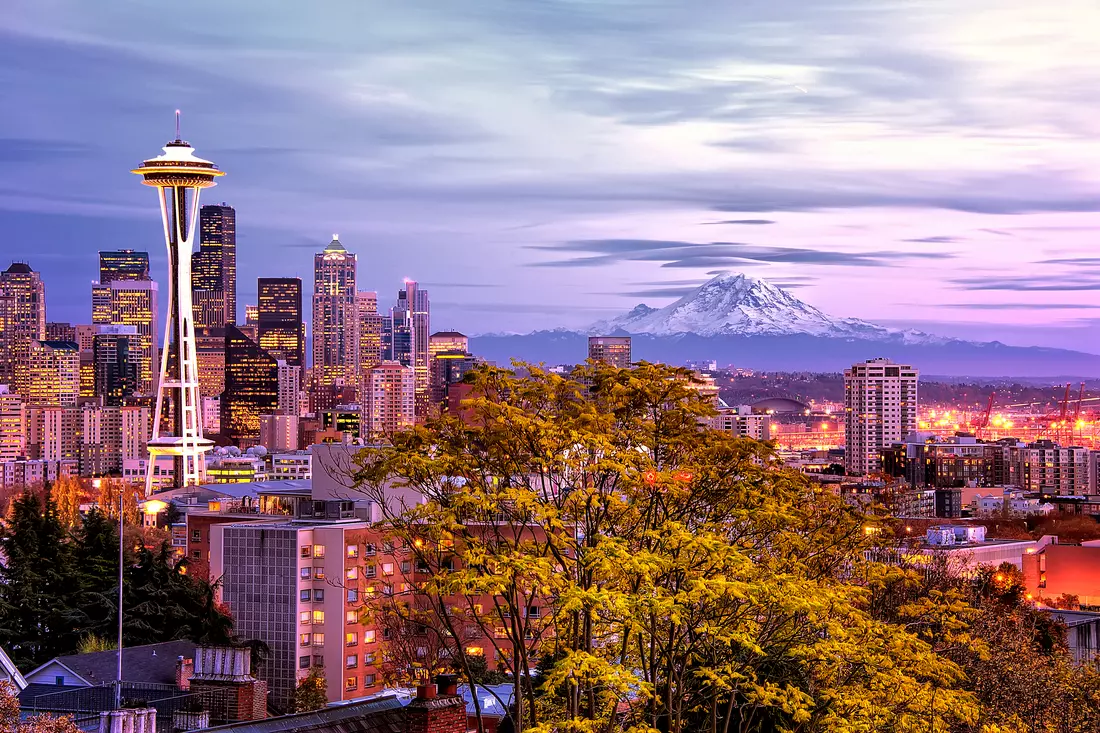
Mount Rainier: Seattle's Natural Gem
Redwood: Forests Where the Sky Feels Closer
When it comes to the grandeur of nature, it’s hard to find a place more impressive than the Redwood forests. These aren’t just trees — they are true giants reaching toward the sky, creating the sensation of being inside a living cathedral. The air here smells of damp wood and moss, and sunlight filters through the canopy, playing with shadows on the ground like light spots on a theater stage.
Redwoods are forests you don’t just see — you feel them. They make you slow down, take deep breaths, and realize that nature has a scale that words can hardly convey.
- 01. First impression: giants at every step
From the moment you enter the forest, the scale is overwhelming.
- Trunks up to 9 meters in diameter;
- Trees reaching heights of 115 meters;
- Moss and ferns create the feeling of a primeval forest.
Interesting fact: The tree “Hyperion,” found in these forests, is considered the tallest on Earth — its height is nearly that of a 40-story building! Standing next to such a giant, you can’t help but feel small, like returning to childhood and marveling at the world again.
- 02. Light and shadow: nature’s play
Redwood forests are unique not only for the size of their trees.
- Sunlight filters through the dense canopy;
- Long shadows and beams of light form on the forest floor;
- Sometimes the light creates whimsical patterns on the ground.
This interplay of light makes a walk feel like a journey into another world — quiet, majestic, almost magical.
- 03. Ancient giants and their stories
Redwoods are living witnesses of history.
- The trees are over 2,000 years old;
- Some have survived dozens of human generations;
- The roots and trunks tell stories of survival in a harsh climate.
Each tree is its own story, and walking through the forest is not just a stroll but a journey through time. Little secret: the redwood forests are so dense that even in summer, the temperature in the shade is a few degrees cooler than in open areas, and humidity remains nearly constant.
- 04. Trails and routes: a path through grandeur
The park offers many routes, suitable for both short walks and longer hikes:
- Easy paths along rivers and waterfalls;
- Longer trails through dense forest sections;
- Observation platforms to view the forest from above.
Even a short walk offers the chance to feel the scale and beauty, understanding why these forests are called the “living skyscrapers of nature.”
- 05. Atmosphere and sensations
A walk through the Redwoods is not just visual: you hear only the whisper of the wind in the treetops, sometimes birds singing, and the air is rich with the scent of pine, moss, and earth. This place slows down time. You want to move slowly, listen, and simply be part of the forest.
Interesting fact for nature lovers: some redwoods have hollows that house rare birds and squirrels, while mosses and lichens cover the trunks, creating a mini-ecosystem on each tree.
Redwoods convey a sense of scale, history, and harmony with nature:
- Trees reaching toward the sky;
- Light and shadows creating a living picture;
- Silence that gives space for personal reflection.
Anyone who has walked among these giants leaves with an understanding that nature is capable of grandeur that cannot be artificially reproduced.
Mono Lake: The Lake Where Nature Becomes a Sculptor
Mono Lake is not just a lake. It’s a place where water, salt, and limestone create a surreal landscape, as if nature decided to take on the roles of both painter and sculptor at the same time. Standing on the shore, it’s hard to immediately tell where reality ends and imagination begins: the strange limestone towers, water reflections, and play of light make every scene unusual and mesmerizing.
The lake amazes with its uniqueness: the water has an unusual saline hue, and misty sunrises and sunsets transform Mono Lake into a space that feels from another planet.
- 01. First impression: a world of sculptures on the water
Approaching the shore, you immediately notice the “towers” — the so-called tufa formations.
- They form from calcium carbonate washed from the lakebed;
- Some towers reach several meters in height;
- The shapes are whimsical, like giant fingers, columns, or fantastical figures.
Interesting fact: Tufa formations grow underwater, and when the lake level drops, they are revealed to visitors, creating a surreal landscape.
- 02. The play of light and water
Mono Lake is especially striking at sunrise and sunset:
- The water reflects the sky and towers, doubling the visual effect;
- The sun colors the limestone in soft orange, pink, and golden hues;
- Morning mist adds a sense of mystery and depth.
Each moment here is unique — no photo can fully capture what you see with your own eyes.
- 03. Colors and contrasts
- The water has a bluish-green tint due to salinity and minerals;
- The white and gray tufa towers sharply contrast with the lake surface;
- On a clear day, the horizon seems endless, and the towers appear to float in the air.
The contrasts create a surreal feeling, as if you’ve stepped into an illustration of a fantastical book.
- 04. Trails and viewpoints
Mono Lake is perfect for walks and observation:
- Short paths along the shore offer the best views of the tufa;
- Observation points provide a full view of the lake and the scale of the formations;
- Hiking routes are ideal for sunrise photography.
Little secret: the quieter and slower you move, the more details you notice — sometimes the towers seem alive, as wind and gentle ripples change their outlines.
- 05. An atmosphere that lingers
Visiting Mono Lake gives a sense of silence and unusual harmony:
- The sound of water and a gentle breeze creates a calming background;
- The unusual formations make you reflect on time and nature;
- The place seems to stop the clock, allowing you to observe and feel.
It’s the combination of strange beauty, the water’s color, and the shapes that makes Mono Lake a place that stays in memory for a long time.
Why is Mono Lake unique?
- It’s one of the few lakes in the world with tufa formations;
- An atmosphere of surrealism and quiet;
- Sunrises and sunsets turn the landscape into a living painting;
- A sense of scale and time — as if nature itself became the artist.
Mono Lake is a place that captures the imagination, makes you pause, and immerse yourself in the unique beauty of California.
Anza-Borrego: The Desert That Knows How to Bloom
When you hear the word “desert,” the first images that come to mind are sand, heat, and dry rocks. But Anza-Borrego is a completely different world. In spring, this desert transforms into a living palette of colors: bright yellows, pinks, oranges, and purples carpet the land, as if nature decided to craft the largest rug in the world. And this miracle lasts only a few weeks, making the moment feel almost magical.
Anza-Borrego is a perfect example of how nature can amaze and transform even the harshest conditions into a fairytale landscape.
- 01. First impression: a sea of flowers in the desert
Approaching the park, you first see familiar desert hills, then — an explosion of color:
- Flower carpets stretch for tens of kilometers;
- The variety of plants is striking — from small wildflowers to rare shrubs;
- Sunlight highlights each petal, creating a play of light and shadow.
Interesting fact: The bloom in Anza-Borrego depends directly on winter and early spring rains — sometimes it hardly occurs, other times it transforms the desert into a living kaleidoscope.
- 02. Rare plants and amazing adaptations
The desert is a harsh environment, and its plants have learned to survive:
- Many flowers open only in the morning and close by noon to conserve moisture;
- Shrubs and cacti have unusual shapes adapted to wind and sun;
- Some rare species grow nowhere else in the world.
Each plant is a small miracle of nature, fighting for life while decorating the desert.
- 03. Blooming and the desert landscape
In spring, Anza-Borrego combines the vividness of flowers with typical desert forms:
- Sand dunes and rocks contrast with the soft petals;
- Scattered trees add vertical accents;
- The expanses seem endless, and each step reveals new compositions.
This blend of harsh and delicate, desert and blooming, makes the park truly special.
- 04. Trails and walking routes
The park offers various routes for those who want to enjoy the bloom:
- Short paths along main blooming zones;
- Longer routes exploring valleys and canyons;
- Viewpoints offering panoramic views of the flowering desert.
Little secret: the best time to see the bloom is early morning or late evening, when the sun is soft and colors appear rich and vibrant.
- 05. Atmosphere and impressions
Anza-Borrego is a place where life is felt even in the desert:
- The scent of flowers mingles with the dry air;
- A gentle breeze stirs the petals, creating a sense of movement;
- The desert’s quiet amplifies the feeling of solitude and harmony.
Visiting the park in spring is an opportunity to see how nature can amaze and transform even the most inhospitable landscapes.
Why is Anza-Borrego worth seeing?
- A unique phenomenon — a blooming desert;
- The combination of harsh landscapes and vivid colors;
- A chance to feel the harmony and grandeur of nature;
- The rarity and short duration of the bloom make the moment almost magical.
Anza-Borrego proves that even a desert can become a fairytale if you know when to visit.
Mammoth Lakes: The Mountain California You Want to Experience, Not Just See
Some places are made for a “one-day visit,” while others make you want to stay longer. Mammoth Lakes belongs to the latter. This corner of California combines mountains, lakes, and fresh air to create the feeling that you’re far from civilization, even though everything is accessible and comfortable.
There’s no rush here, no crowded park chaos — just space, quiet, and nature that reveals itself gradually.
- 01. Lakes reflecting the mountains
The main feature of Mammoth Lakes is the dozens of mountain lakes scattered among coniferous forests and volcanic landscapes.
- The water is crystal clear and cold;
- Lake surfaces reflect the sky and mountain peaks;
- Each lake has its own shape, color, and atmosphere.
One of the most famous is Convict Lake: its deep water color and dramatic mountain walls create an almost cinematic view. Interesting fact: Many lakes formed from ancient volcanic activity, giving them unique shapes and terrain.
- 02. Nature that changes at every step
Mammoth Lakes offers landscapes that constantly evolve:
- Forests transition into open alpine meadows;
- Rocky areas give way to soft grass;
- Trails lead sometimes to the water, sometimes to viewpoints.
Every walk is a little journey within a larger adventure.
- 03. Summer: hiking, kayaking, and quiet
During the warm season, Mammoth Lakes is ideal for outdoor activities:
- Hiking trails of varying difficulty;
- Kayaking on calm lakes;
- Picnics with mountain views.
It’s easy to find a spot where you feel almost alone — even in peak season. Pro tip: head out early in the morning — the light is soft, there are fewer people, and the lakes appear perfectly calm and mirror-like.
- 04. Autumn: gold among the mountains
Autumn is one of the most beautiful periods:
- Trees turn golden and orange;
- The air becomes clearer;
- The contrast between warm leaf colors and cold water intensifies.
It’s perfect for relaxed walks and photography.
- 05. Winter: a different California
Many don’t expect California to look like this in winter. At Mammoth Lakes:
- One of the state’s top ski resorts;
- Snowy landscapes reminiscent of the Alps;
- Fresh air and bright sunlight.
In winter, the area transforms into a full-fledged alpine resort.
- 06. An atmosphere that lingers
Mammoth Lakes isn’t about a fleeting “wow” moment. It’s about calm, a slow pace, and the feeling that you’re immersed in nature rather than just observing it. Here, you want to linger by a lake, walk an extra mile on a trail, sit in silence, and simply watch the water.
Why include Mammoth Lakes in your itinerary?
- A combination of mountains, lakes, and forests;
- Fewer tourists compared to Yosemite;
- Variety of activities year-round;
- Perfect spot for a “breather” between busy destinations.
Mammoth Lakes often remains off standard routes — and that’s exactly why it becomes one of the most delightful discoveries of a trip.
Kings Canyon: Nature’s Giant Hidden from the Crowds
When it comes to California’s natural grandeur, Yosemite often takes the spotlight. But nearby lies a lesser-known yet equally impressive park — Kings Canyon. This corner of the state is made for those who want to escape the tourist crowds and feel the raw power of land, water, and forests. Here, deep canyons cut through mountain masses, rivers rush with unstoppable energy, and the air is filled with the freshness of coniferous forests.
Kings Canyon is a place where the scale and force of nature are palpable, where every step reveals new panoramas, and the noise of tourists stays far behind.
- 01. First impression: awe-inspiring canyons
The park’s most striking feature is its deep canyons:
- Canyons carved by rivers create dramatic landscapes;
- The height of rock walls is breathtaking — the earth seems to stretch endlessly upward;
- Trails along the canyons offer views that linger in memory.
Interesting fact: Kings Canyon includes one of the deepest canyons in the U.S. — in some places, it exceeds 1,800 meters, making it a true giant compared to more famous canyons.
- 02. Rivers and waterfalls: movement of power
The park’s rivers are more than just water sources — they are visual highlights:
- Rushing streams form cascades and roar over long distances;
- The park boasts several impressive waterfalls, especially powerful during spring snowmelt;
- Water weaves through the landscape, creating green oases among rocks and forests.
Walking along a river allows you to feel the energy, rhythm, and force of the water that shaped the canyons over millennia.
- 03. Forests and solitude
One of Kings Canyon’s main advantages is the absence of crowds:
- Few tourists provide a complete sense of solitude;
- Coniferous forests cover large areas of the park;
- The scent of pine and fresh earth enhances the feeling of untouched nature.
Insider tip: In these forests, you can encounter giant sequoias, just as impressive as those in Yosemite, yet with almost no visitors around.
- 04. Trails and viewpoints
The park offers a variety of routes:
- Short walks overlooking canyons and rivers;
- Longer trails through forests and high passes;
- Lookout points providing breathtaking panoramas of valleys and cliffs.
Even a short trail lets you fully immerse yourself in the atmosphere of vast, powerful, and tranquil nature.
- 05. Why Kings Canyon is unique
- Deep canyons and powerful rivers that impress any nature lover;
- Fewer tourists than neighboring parks, creating a sense of solitude;
- Variety of landscapes, from forests to rocky cliffs;
- An opportunity to feel part of the natural force and scale.
Kings Canyon is a discovery for those who want to witness the true power of California’s nature, feel its rhythm and grandeur, without the distraction of crowds.
How to Properly Plan a Route Through California’s Natural Gems
Traveling through California is not just about checking off "I was there" — it's a true experience of changing scenery: from the ocean to snow-capped peaks, from deserts to giant forests. But the biggest mistake many tourists make is trying to see everything in a single visit. Due to the state's size and the variety of landscapes, rushing to cover all the sights often leads to fatigue and shallow impressions.
To truly enjoy your trip, it’s important to plan your routes wisely, taking into account not only distances but also the pace of your journey, the season, and weather conditions.
- 01. Divide your trip into regions
California is vast, so it’s better to split your trip into thematic blocks:
- Coast:
Big Sur, Point Reyes. Here you’ll get the full experience of the ocean, winding roads, lighthouses, and sunsets. Tip: unnamed stops along the highway are often the most scenic — don’t rush. - Mountains and Lakes:
Yosemite, Tahoe, Mammoth Lakes, Shasta. Perfect for hiking, waterfalls, crystal-clear lakes, and giant sequoias. Tip: to avoid crowds, visit on weekdays and choose trails less known in tourist guides. - Deserts and Unique Landscapes:
Death Valley, Joshua Tree, Anza-Borrego, Mono Lake. These places look especially beautiful at sunrise and sunset when the light highlights shapes and colors. Tip: visit Anza-Borrego in spring — the short bloom period turns the desert into a fairytale.
- 02. Consider distances
California is huge: sometimes traveling between sights takes 4–5 hours. Therefore, it’s worth:
- Planning your travel time in advance via Google Maps, factoring in traffic;
- Using overnight stays in key locations so you don’t spend the day driving hundreds of kilometers;
- Planning your fuel stops, especially in desert areas where gas stations are rare. Tip: on the coast, Highway 1 is a sight in itself, and in the deserts, it’s better to travel in the morning or evening due to heat.
- 03. Plan 2–3 key spots per day
Even if you want to see more, it’s better to focus on a few locations:
- You’ll have time to enjoy each place instead of rushing by;
- You can take quality photos and discover hidden corners;
- You’ll reduce stress from constant rushing.
For example: Day 1: Big Sur + McWay Falls + Bixby Creek Bridge; Day 2: Yosemite + waterfalls + Half Dome viewpoint; Day 3: Death Valley + Zabriskie Point.
- 04. Tips for a comfortable trip
- Season: spring and early summer for waterfalls and blooming deserts, autumn for comfortable temperatures in mountains and along the coast;
- Overnight stays: book in advance in popular spots like Tahoe and Yosemite; in less-known parks, camping or tents are good options;
- Transport: renting a car with comfort and a spacious trunk is essential — public transport covers only limited areas;
- Gear: comfortable hiking shoes, sunglasses, hats, and a thermos of water are must-haves for deserts and mountains.
- 05. How to make your trip rich yet relaxed
- Alternate active days (hiking, canyon drives) with more relaxed ones (coast, lakes);
- Leave some buffer for unexpected situations: fog, road repairs, or wanting to linger in a favorite spot;
- Use mobile apps for tracks and offline maps — especially useful in deserts and mountains.
Little secret: sometimes the most memorable moments happen off-plan — a sunset at Lake Tahoe or a random trail in the Redwoods can become the highlight of your trip.
Planning a California route is an art of balancing:
- Distances and time;
- Key points and spontaneous stops;
- Seasonal phenomena and nature’s activity.
When your route is well thought out, the trip becomes not a race, but a series of experiences, changing scenery, and the opportunity to truly feel the diversity of California.
Turn Your Trip into an Experience, Not a Checklist, with American Butler
California isn’t just a collection of beautiful spots on a map. It’s the feeling of the road, the changing landscapes, and shifting states of mind. One day you stand by the ocean listening to the waves, the next — you’re gazing at the granite walls of Yosemite National Park, and a day later you find yourself amid the surreal landscapes of Death Valley.
And that’s its true value. But there’s an important point that’s often underestimated: your experience of California depends not on the number of places you visit, but on how you structure your route. You can drive thousands of kilometers, check off every sight, and return exhausted, with the feeling that it was beautiful but rushed. Or you can do it differently: leave space for stops, arrive at the right time and light, and linger where you want to linger.
Then the trip becomes the kind of journey that stays with you for a long time. If you want not just a trip, but a thoughtfully planned journey without unnecessary hassle, it makes sense to entrust the planning to those who know these routes inside out.
American Butler helps to:
- Create a route tailored to your pace and interests;
- Connect locations optimally without overloading;
- Take into account season, weather, and road nuances;
- Add those hidden gems that guidebooks don’t mention.
You don’t worry about logistics. You don’t rush. You don’t miss what matters. You simply live California — from the ocean to the deserts, from the forests to the mountains.
Share