

There are places that are hard to simply call a museum or just a park. They exist somewhere between art, architecture, and living nature, turning an ordinary stroll into a true journey. The Besthoff Sculpture Garden is precisely such a place — one of the most beautiful sculpture gardens in the United States and, without exaggeration, one of New Orleans' most underrated attractions.
Most visitors come to the city for the French Quarter, jazz, the Mardi Gras carnival, or steamboat cruises along the Mississippi. Yet just a short drive from the bustling center reveals an entirely different New Orleans — serene, lush, and remarkably harmonious. Here, within the famed City Park, among centuries-old live oaks, mirror-like lagoons, and flowering gardens, lies a world-class collection of contemporary sculpture.
The Besthoff Sculpture Garden has long ceased to be merely an extension of the New Orleans Museum of Art. Today, it stands as a destination in its own right, drawing art lovers, architects, photographers, designers, families with children, and travelers eager to see the city from a different perspective.
What makes it especially appealing is that experiencing one of America's finest collections of modern sculpture is accessible to almost everyone: admission to the garden remains free, and the atmosphere is so relaxed that many visitors spend hours, leisurely moving from one sculpture to the next.

Hurricane Katrina flooded much of City Park in 2005. Despite severe damage to the grounds, museum staff and conservators were able to save nearly all the sculptures in the Besthoff Sculpture Garden collection.
The Besthoff Sculpture Garden is a place where art comes to life among ancient live oaks and glassy lagoons
When people speak of contemporary art museums, most imagine spacious exhibition halls, white walls, perfect lighting, and signs requesting silence. But the Besthoff Sculpture Garden completely overturns that notion. Here, art is not hidden under a roof or separated from visitors by glass. It exists in the open air, surrounded not by concrete and brick, but by water, trees, flowering plants, and birdsong.
This is precisely why many travelers call the Besthoff Sculpture Garden not just a museum, but one of the most beautiful art parks in the United States. It welcomes art connoisseurs, families with children, photographers, art students, and casual tourists alike — including those who have never before taken an interest in contemporary art.
Unlike most well-known museums, this garden does not compel visitors to follow a predetermined route. There is no sense that you must view every exhibit in strict order or read the description of every piece. Instead, a stroll here feels like a small journey, where each new artwork becomes a delightful surprise.
- 01. A museum without walls, where nature itself is the chief architect
The Besthoff Sculpture Garden is located adjacent to the New Orleans Museum of Art (NOMA) within the picturesque City Park — one of the largest urban parks in the United States. Today, the garden spans over 11 acres (approximately 4.5 hectares), yet it feels much larger thanks to its thoughtful design and seamless transitions between natural zones. There are no conventional museum galleries here. Instead of long corridors, visitors encounter winding pathways, wooden boardwalks, small bridges, and open clearings. Each path reveals a new vista, and the landscape seems almost purpose-built to allow artworks to gradually emerge into view. As you walk, you are surrounded by tranquil lagoons with mirror-smooth water, centuries-old southern live oaks with sprawling branches, ornamental ponds, green lawns, flowering shrubs, shaded alleys, elegant bridges, and carefully planned viewing platforms. This design makes the experience extraordinarily peaceful. Even at the height of tourist season, the garden rarely feels crowded. The space is arranged so that people naturally disperse throughout the grounds, allowing each visitor to enjoy the art at their own pace. - 02. Every sculpture is exactly where it belongs
If you look closely, it becomes clear that nothing in the Besthoff Sculpture Garden is left to chance. Each work of art is placed only after extensive deliberation among curators, architects, and landscape designers. Dozens of factors are considered when selecting a location: the direction of sunlight at different times of day, seasonal changes in vegetation, sightlines, reflections in the water, proximity to trees, distance from other exhibits, and the contours of the terrain. This is why it feels as though every sculpture has always been there.
Some works are dramatically reflected in the mirror-like surface of the ponds. Others are tucked among dense greenery, catching visitors off guard as they round a bend in the path. Still others rise on open lawns, their silhouettes standing out powerfully against the sky. There are also pieces that become visible only from a particular angle — take a few steps, and a familiar composition transforms completely. Such an effect is impossible to recreate in a conventional museum. - 03. Why a walk through the garden feels nothing like a museum visit
Once inside the Besthoff Sculpture Garden, many visitors notice an unusual sense of freedom. No one rushes you. There is no single "correct" route. You can pause in front of a sculpture you love for ten full minutes, then suddenly change direction and explore a neighboring path. Guests spend their time in entirely different ways. Some read every informational plaque carefully. Others simply wander, soaking in the natural beauty. Photographers wait patiently for the perfect light. Artists sketch. Locals come here for morning jogs or tranquil strolls.
This approach brings art much closer. It ceases to feel formal or inaccessible. Instead, you get the sense that these works have become a natural part of the world around you. - 04. Why the Besthoff Sculpture Garden is considered one of the best sculpture parks in America
In a relatively short time, the garden has gained international renown and regularly appears in rankings of the finest open-air museums. The reason for its success lies not only in its impressive collection. Several key elements have come together here.
Today, the garden features works by artists who have shaped the history of modern sculpture. Among them are Henry Moore, Auguste Rodin, Fernando Botero, Louise Bourgeois, Joan Miró, Antoine Bourdelle, Barbara Hepworth, Anthony Caro, Isamu Noguchi, Alberto Giacometti, and many other outstanding masters. For most art museums worldwide, such a collection would be the centerpiece of their permanent exhibition.
At the Besthoff Sculpture Garden, these works are displayed in the open air, making them feel profoundly different. The sculptures interact not only with the viewer but also with their surroundings — changing with the light, the weather, and the seasons. - 05. Art without barriers
Contemporary art often strikes people as difficult or even incomprehensible. Many museum visitors worry that they do not know enough about painting or sculpture to truly appreciate it. The Besthoff Sculpture Garden dismantles that stereotype entirely. Here, no one expects you to analyze artistic movements or search for hidden philosophical meanings. You can simply stroll. Observe the forms. Watch how bronze catches the sunlight. Hunt for interesting angles. Compare one piece to another.
This is why the garden appeals even to those who have never before been drawn to contemporary art. You do not need specialized knowledge to enjoy a walk here. Curiosity is all that is required.
One of the most unusual qualities of the Besthoff Sculpture Garden is that it is impossible to separate the art from the surrounding landscape. The water becomes an extension of the sculptures. The trees serve as natural backdrops. The shadows add a third dimension. Even the wind takes part in creating the atmosphere, stirring the leaves and making them softly move around the still works of art. At times, it feels as though nature is the one completing the artist's work.
Each season reshapes the garden's character. In spring, sculptures are enveloped by vibrant greenery and flowering magnolias. In summer, dense canopies cast deep shadows and offer respite from the heat. In autumn, bronze surfaces take on particularly warm tones in the low sunlight. Even in winter, when foliage thins, the compositions reveal themselves anew — more open spaces and soft winter light offer a fresh perspective.
That is why so many New Orleans residents return here time and again. They know that each visit will reveal a familiar garden in a slightly different light — and that, perhaps, is one of the greatest wonders of the Besthoff Sculpture Garden.
From abandoned wasteland to global landmark: the extraordinary story of the Besthoff Sculpture Garden
Today, it is hard to believe that one of the most beautiful sculpture parks in the United States was once an unremarkable stretch of swampy land. The neat pathways, mirror-like ponds, works by world-renowned masters, and manicured gardens are so seamlessly integrated into the surrounding landscape that it feels as though the Besthoff Sculpture Garden has always been here.
But the story of this place is a testament to how a bold idea, a love of art, and a desire to make it accessible to everyone can literally transform a cityscape.
- 01. It all began with a dream to take art beyond the museum walls
By the end of the 20th century, the New Orleans Museum of Art (NOMA) was already one of the largest art museums in the American South. Its collection was constantly growing, including works by outstanding sculptors of the 20th century. However, a problem familiar to many museums around the world arose. Sculpture demands space. Even large exhibition halls do not always allow you to see a three-dimensional work as the artist intended. Indoors, it is impossible to experience the play of natural light, to appreciate a silhouette against the sky, or to see how a piece interacts with its surroundings.
The museum's leadership understood that part of the collection was literally begging to be displayed outdoors. The idea of creating a separate garden had been discussed for years, but a project like this required a suitable site. Fortunately, such a plot existed right next to the museum. Though at the time, it bore little resemblance to the future world-class park. - 02. The future garden site had long been an abandoned wasteland
The area where thousands of tourists now stroll had been virtually unused for decades. It was a low-lying, swampy tract of land near the City Park lagoons. At one time, it housed maintenance zones and service areas. Over the years, part of the territory had become an overgrown dumping ground, collecting construction debris, old utilities, and various urban refuse. Due to the terrain's characteristics, the site regularly flooded after heavy rains. It was completely unsuitable for walking. Most city residents were unaware of its existence. The architects faced a formidable challenge — not simply to lay out a park, but to essentially create a visitable landscape from scratch. - 03. How a garden that never existed was brought to life
The work on the project proved far more complex than one might imagine. Nearly the entire area had to be completely redesigned. Specialists reinforced the soil, reshaped the terrain, created artificial elevations, and dug new drainage channels. Special attention was paid to preserving the old oaks. Some trees were several centuries old, so the layout of the future garden was built around them. The architects did not want to destroy the existing natural landscape; on the contrary, they sought to accentuate its strengths. Simultaneously, artificial ponds, walking paths, wooden bridges, small islands, viewing platforms, lighting systems, and modern utilities were created. Every path was designed to gradually reveal new views to the visitor. It is impossible to see the entire garden at once during a walk. Each turn becomes a small discovery. - 04. The grand opening in 2003
The Besthoff Sculpture Garden officially opened to visitors in 2003. From the very first months, it became clear that the museum had gained far more than just an additional exhibition space. The new garden quickly became a destination in its own right. Tourists, photographers, artists, architects, students, families with children, and locals all came to visit. Many admitted that this was the first time they had truly enjoyed encountering contemporary art. The unconventional format proved remarkably successful. Instead of a formal museum setting, people found themselves in a beautiful park where art could be appreciated easily and naturally. - 05. When popularity exceeded all expectations
Within just a few years of its opening, it became clear that the original area was struggling to accommodate growing visitor interest. The museum's collection continued to expand. New works by contemporary artists were added. At the same time, the curators deliberately avoided overcrowding the sculptures. A sense of spaciousness had always been one of the garden's defining features. Therefore, the museum's leadership decided not simply to add a few new paths, but to significantly expand the entire park. - 06. The major expansion of 2019
After several years of preparation, one of the largest phases in the development of the Besthoff Sculpture Garden was completed in 2019. The garden's area nearly doubled. As a result, new walking routes, additional water features, modern bridges, spacious green zones, and dozens of new sites for sculptures appeared. The expansion allowed the garden to present visitors with numerous new works by world-famous artists. At the same time, the architects preserved the project's core philosophy. Despite the enlarged territory, the park still feels calm and secluded. Even on the busiest days, there is rarely a sense of overcrowding. Today, this version of the Besthoff Sculpture Garden is regarded as one of the world's finest realizations of an open-air museum. - 07. The trial of Katrina: how a hurricane nearly destroyed the garden
Just two years after its opening, the park faced the most serious test in its history. On August 29, 2005, the devastating Hurricane Katrina struck the coast of Louisiana. The storm became one of the largest natural disasters in U.S. history. Because the Besthoff Sculpture Garden is located in a low-lying part of City Park, the consequences were unavoidable. After the levees broke, much of the area was submerged. Some sections were almost entirely flooded. Powerful winds toppled trees, destroyed infrastructure, and scattered debris throughout the park.
The wooden boardwalks suffered severe damage. Some paths were washed away. Engineering systems failed. The plant life suffered particularly badly. Saltwater that had seeped into the soil caused immense damage to lawns, shrubs, and young trees.
Fortunately, most of the sculptures survived the catastrophe far better than could have been expected. The massive bronze and stone works of art withstood the force of the storm. However, after the waters receded, a difficult scene awaited museum staff. Nearly every work had to be carefully examined. Conservators cleaned surfaces of mud, silt, and salt deposits. Some metal elements required additional restoration. Just as much attention was given to the condition of the bases and foundations. After prolonged flooding, specialists checked the stability of every installed sculpture. This work continued for many months.
For the people of New Orleans, the restoration of the Besthoff Sculpture Garden meant far more than just repairing a park. After Katrina, the city was learning to live again. Homes, schools, museums, theaters, and streets were rebuilt. The revival of a beloved sculpture garden became a symbol that culture can endure even the harshest trials. Gradually, visitors returned. The restored gardens bloomed again. New plants were added. Bridges and paths were repaired. Fountains and lighting systems came back to life.
Today, as you stroll through the Besthoff Sculpture Garden, it is hard to imagine that just two decades ago, this place endured one of the most destructive floods in its history. That is why the garden is considered not only an outstanding cultural landmark, but also a symbol of New Orleans' resilience — a city that time and again finds the strength to rise, preserving its unique beauty and love of art.
Who were Sydney and Walda Besthoff? The couple behind New Orleans' iconic sculpture garden
Anyone who first hears the name Besthoff Sculpture Garden inevitably wonders: who are the Besthoffs, and why is one of America's most famous sculpture gardens named after them?
The answer lies in the remarkable story of a family who achieved success in business yet chose to invest a significant portion of their fortune not in lavish mansions or prestige projects, but in the cultural development of their hometown. Thanks to their generosity, New Orleans gained a place that today attracts hundreds of thousands of visitors each year. Yet Sydney and Walda Besthoff themselves never sought fame. They believed that true wealth lies not in amassing art, but in the ability to share it with others.
- 01. Sydney Besthoff: a successful entrepreneur who never forgot his hometown
The name Sydney Besthoff is well known to several generations of Louisiana residents. For many years, he was a leader of the legendary K&B Drug Stores chain — a company that meant far more to New Orleans than just a retail network. Founded in the early 20th century, K&B gradually became a true urban icon. People bought medicine, cosmetics, household goods, and gifts there, and the brand's signature purple signage became so recognizable that many locals still feel a pang of nostalgia when remembering the famous stores.
Working in the family business, Sydney proved himself a talented executive and a visionary entrepreneur. Under his leadership, the chain expanded aggressively, opening new branches across the southern United States. Financial success allowed the family to devote themselves to what truly brought them joy — supporting the arts. - 02. A love of art became a family tradition
Unlike many wealthy collectors who acquire art as a status symbol or a profitable investment, the Besthoffs approached collecting in a completely different way. They genuinely loved contemporary sculpture. During their travels through Europe and the United States, the couple regularly visited museums, art exhibitions, the studios of renowned sculptors, and international art fairs. Over time, their private collection became one of the most interesting in Louisiana. But what was most remarkable was not the number of artworks, but the family's attitude toward them.
For the Besthoffs, sculptures were never luxury items meant exclusively for their owners. They believed that true art should inspire people, evoke emotions, surprise, and become part of public life. That is why many works from their collection later became accessible to the wider public. - 03. Why the couple chose not to keep their collection to themselves
One might have expected such a valuable collection to remain the private treasure of the family's residence. However, Sydney and Walda adhered to a completely different philosophy. They were convinced that works of art truly come to life only when thousands of people can see them. There are many famous collections that remain hidden behind the walls of private homes for decades, practically inaccessible to the public. The Besthoffs did not wish to follow that path. Their dream was to create a space where anyone — regardless of age, profession, or income — could freely encounter the works of the greatest contemporary masters. That is why the couple began actively collaborating with the New Orleans Museum of Art, which was already the leading art museum in Louisiana. - 04. Not just a donation, but the creation of a new cultural tradition
The family's support for the museum was not limited to donating individual works of art. For many years, they funded the acquisition of new exhibits, educational programs, temporary exhibitions, and projects aimed at popularizing art among the city's residents. Gradually, an idea for a far more ambitious project took shape. Why not create a museum without walls?
A place where sculptures could exist in a natural environment, surrounded by water, trees, and open sky. That was how the concept of the future Besthoff Sculpture Garden was born. Its realization required significant financial investment. The Besthoff family covered the majority of the costs, enabling the museum to bring to life a project that, otherwise, would most likely have remained a beautiful dream. - 05. Philanthropy that changed the city
History knows many examples of patrons funding the construction of museums or theaters. Yet the Besthoffs' contribution proved exceptional. They did not simply finance a new cultural facility — they changed the very way New Orleans residents relate to contemporary art. Before the sculpture garden, many perceived the museum as a place visited mainly by specialists, collectors, or painting enthusiasts. The Besthoff Sculpture Garden showed that art can be open, accessible, and understandable to everyone. Now, it attracts not only sculpture connoisseurs but also families with children, athletes, photographers, students, tourists, and simply people who want to spend time outdoors. In many ways, it is this very inclusivity that has become the Besthoffs' greatest legacy.
In the global museum world, it is not uncommon for the name of a major benefactor to be given to a new wing, exhibition hall, or gallery. But in the case of the Besthoff Sculpture Garden, the name has become more than just a form of gratitude. It reminds visitors of the people who made art no longer the privilege of a select few. Everyone who strolls through the garden's shady paths becomes, in a sense, a participant in an idea once proposed by Sydney and Walda. That idea is remarkably simple: great works of art should belong not only to museums, but to society as a whole.
Even years after the garden opened, the Besthoff family's influence continues to be felt. The collection is regularly enriched with new works. Educational programs are expanding. Lectures, guided tours, and activities for children are held on a regular basis. The garden remains free to visit, fully in keeping with the founders' original philosophy — to make world-class art as accessible as possible.
Today, the Besthoff name is known far beyond Louisiana. It is associated not with a successful business or a chain of drugstores, but with one of the best sculpture parks in the world — a place where contemporary art meets nature, and where thousands of people daily discover that true generosity is measured not in money, but in the legacy one leaves behind.
Where ancient oaks meet modern art — City Park and the Besthoff Sculpture Garden
There are places where the space itself becomes part of the experience. In the case of the Besthoff Sculpture Garden, this feeling is inseparable from its surroundings. Even the most impressive sculptures are perceived differently because they do not exist in isolation — their "stage" is one of the largest and most picturesque urban parks in the United States: New Orleans' City Park.
If you tried to imagine this sculpture garden somewhere in the middle of a metropolis, surrounded by glass skyscrapers and the constant hum of the city, it would lose much of its magic. Here, amidst the silence, the water, and the ancient trees, art literally begins to breathe.
- 01. City Park — the green heart of New Orleans
City Park is not just a park. It is a vast natural territory that, in scale and diversity, rivals an entire city within a city. Its area exceeds 1,300 acres, making it even larger than the famous Central Park in New York. However, unlike the urban landscape of Manhattan, the sense of nature here is far more "wild" and natural. As you walk through the park, it is easy to forget you are in a city. The noise of the roads gradually fades, giving way to birdsong, the rustle of leaves, and the gentle lapping of water in the lagoons. - 02. What lies within City Park
At first glance, it may seem like just a large green park for walking. But in reality, its structure is far richer and more diverse. Several important cultural and recreational zones are located here:
- One of the region's oldest botanical gardens;
- A small but highly popular amusement park, Carousel Gardens;
- The renowned New Orleans Museum of Art (NOMA);
- Numerous sports facilities and open fields;
- Extensive walking and jogging trails;
- Picturesque lakes and lagoons;
- Famous oak alleys;
- Cozy cafés and relaxation areas;
- Historic pavilions and architectural landmarks.
This combination makes City Park a space where you can spend an entire day, constantly shifting between different kinds of leisure — from tranquil strolls to cultural discoveries.
- 03. Oaks that remember history long before the city
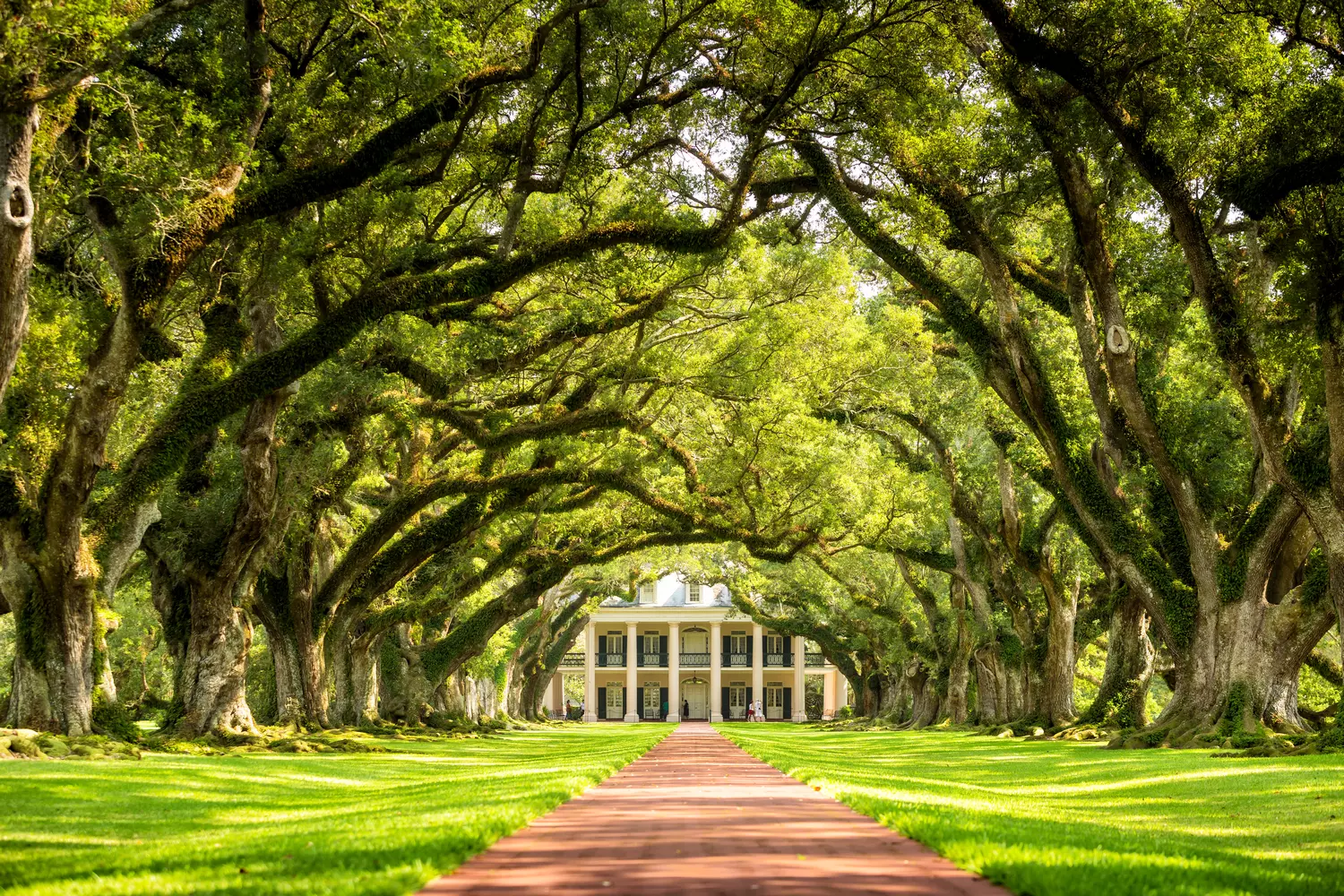
One of the most impressive features of City Park is its trees. Here grow majestic southern live oaks, some of which are 600 to 800 years old. This means that some of them began to grow long before New Orleans itself was founded. When the city was just taking shape, these trees were already part of the landscape. Today, their enormous canopies form natural green vaults, beneath which pathways wind, sculptures rest, and visitors relax. It is these oaks that create the garden's special atmosphere. Their powerful branches, draped in Spanish moss, seem to hold the memory of different eras — from colonial times to the city's modern cultural life. - 04. When nature becomes a museum
Within City Park, a rare phenomenon occurs — nature and art do not merely coexist; they become a single space. It is beneath the canopies of these centuries-old trees that dozens of contemporary artworks from the Besthoff Sculpture Garden collection now stand. And this proximity leaves a powerful impression. On one side — bronze, steel, granite, and glass, created by 20th- and 21st-century artists. On the other — living trees whose age is measured in centuries. There is no conflict between them. On the contrary, they seem to complement each other. - 05. A dialogue of eras: when sculpture meets nature
The distinctive quality of this place lies in the sense of dialogue. Modern forms of art — sometimes abstract and minimalist — unexpectedly acquire meaning when placed alongside natural forms not created by human hands. The curved lines of sculptures echo the bends of branches. Smooth metallic surfaces reflect the sky, the water, and the foliage. Stone forms seem to continue the contours of the earth. At times, it feels as though the artists created their works already knowing they would stand here. And conversely — as if nature itself had prepared the space for them in advance. - 06. Why the atmosphere here is so unique
If you removed City Park from the equation, the Besthoff Sculpture Garden would simply be a collection of outdoor sculptures. But it is the surroundings that make it unique. There are several reasons why this place resonates so deeply:
- Scale and silence
The vast territory of the park preserves a sense of seclusion even when many visitors are present. People naturally spread across the space, and the garden never feels overcrowded. - A natural "frame" for art
The trees, water, and open sky create natural frames for each sculpture. This makes the experience more vivid and emotional than in a traditional museum. - A constantly changing backdrop
Unlike galleries, the backdrop here never stays the same. Morning light, midday heat, evening shadows, and seasonal changes completely transform the perception of the same sculpture.
One of the most fascinating features of this place is the blurred boundary between City Park and the Besthoff Sculpture Garden. It is impossible to draw a clear line and say, "here nature ends and art begins." The sculptures are not separated from the landscape — they are built into it. Pathways lead through the greenery directly to the artworks, then back into natural areas. This sense of wholeness makes the experience especially harmonious.
Many New Orleans residents visit City Park regularly, and the Besthoff Sculpture Garden becomes part of their daily lives. The reason is simple: this space never looks the same. The seasons change the colour of the foliage, the water level, the light, and the entire mood of the park. Even familiar sculptures are perceived differently each time. Sometimes they appear stern and monumental. Sometimes — soft and almost alive. And at other times — as if dissolving into the surrounding nature.
That is precisely why the Besthoff Sculpture Garden and City Park cannot be considered separately. Together, they form a rare, harmonious union where centuries-old oaks become a natural gallery for contemporary art, and visitors witness how two entirely different epochs — the natural and the human — meet in a single space without conflict, only in dialogue.
Terrifying, mesmerizing, and unexpectedly a love letter — Louise Bourgeois's "Spider"
If you ask visitors to the Besthoff Sculpture Garden which sculpture leaves the strongest impression, many will answer without hesitation: the giant bronze spider. It seems not merely to stand in the garden, but to watch over it — calm, motionless, and yet remarkably alive in its plasticity.
This work is called "Spider" and was created by the French-American artist Louise Bourgeois, one of the most significant figures in 20th-century contemporary art. It is, without a doubt, one of the most emotionally charged objects in the entire garden collection.
- 01. First impression: fear, surprise, or awe
"Spider" is not a small sculpture you can easily pass by. It is a monumental object whose metal legs seem to embrace the space around them. People's reactions are always different:
- Some stop in admiration;
- Others feel a slight tension inside;
- Some instinctively step back;
- Children, on the other hand, move closer and begin examining the details of the structure.
What is striking is that this very combination of reactions makes the sculpture so powerful. It leaves no one indifferent. Even people who have no particular interest in contemporary art almost always remember this piece after visiting the garden.
- 02. Why the spider evokes such varied emotions
The image of the spider in culture is most often associated with something unsettling or dangerous. It is an ancient symbol that triggers an instinctive wariness in humans. Louise Bourgeois understood this perfectly. But instead of softening the image, she intensified it through scale and monumentality. Yet the meaning of the work turns out to be entirely different from what the viewer expects at first glance. - 03. Louise Bourgeois and the personal story hidden in bronze
For the artist, the sculpture "Spider" is not an image of fear, but a deeply personal memory. She dedicated this work to her mother, who restored antique fabrics and tapestries. This work demanded immense patience, meticulous attention, and a refined sense of form. The artist's mother literally "mended" damaged textiles, bringing them back to life. In this process, Bourgeois saw a powerful metaphor. The spider weaving its web became for her a symbol of careful creation, protection, restoration, quiet labor, and invisible but essential care. Thus, a frightening image at first sight transforms into a very personal declaration of love and gratitude. - 04. How light changes the perception of the sculpture
One of the most fascinating aspects of "Spider" at the Besthoff Sculpture Garden is how it interacts with light. Depending on the time of day, the sculpture looks entirely different:
- Morning
Soft, diffused light makes the spider appear calmer. Its silhouette seems almost graphic, and the shadows — light and airy. - Midday
In bright sunlight, the bronze takes on a rich metallic sheen. The spider's legs look more massive, and the shadows become sharp and contrasty. - Evening
The most dramatic moment. The low sun casts long shadows, and the sculpture seems to "come alive," becoming part of the surrounding landscape.
- 05. Why the garden location matters so much
If "Spider" stood in an enclosed space, its effect would be entirely different. But here, in the Besthoff Sculpture Garden, it exists in dialogue with nature. Surrounding it are trees, water, sky, and open space. This makes the sculpture not an isolated object, but part of a living landscape. At times, its reflection in the water adds an almost mystical dimension. At other times, its shadow heightens the sense of scale. And occasionally, the spider seems to merge with its surroundings, becoming an extension of them.
The secret of "Spider" lies not only in its size or material, nor merely in the fame of its creator. The main reason is its emotional impact. This sculpture does not offer a simple answer. It leads the viewer on a journey — from the first impulse to the understanding of meaning. And even after the story is known, the perception never feels "closed." Each new visit brings a new impression. Sometimes the spider appears stern and monumental. Sometimes — surprisingly fragile in the play of light. And sometimes — almost like a living creature that has simply paused for a moment in the silence of the garden.
That is precisely why Louise Bourgeois's "Spider" has become not just one of the most photographed works in the Besthoff Sculpture Garden, but a true symbol of how contemporary art can unite external simplicity of form with a deep, profoundly human meaning — one that reveals itself gradually, step by step, gaze by gaze.
Henry Moore at the Besthoff Sculpture Garden — where void and form speak the same language
There are artists whose works are impossible to mistake for anyone else's. The moment you see the flowing, almost organic forms — the vast bronze volumes punctuated with openings, the sense that the sculpture does not simply "stand" but breathes the space around it — you know: this is Henry Moore.
At the Besthoff Sculpture Garden, his works hold a special place. They do not try to dominate the landscape or compete with nature. On the contrary — they seem to continue its language, translating it into metal and form.
- 01. Why Henry Moore changed our understanding of sculpture
Before the 20th century, sculpture was largely associated with completeness of form. A figure had to be solid, legible, stable. Henry Moore broke this rule. He showed that:
- Form can be open;
- Emptiness is not an absence, but a part of composition;
- The space around an object is as important as the object itself;
- Sculpture can interact with the surrounding world.
This is precisely what made him one of the most influential sculptors of modern times. His works marked the transition from an "object on a pedestal" to an "object in space."
- 02. Form that lets the air in
The most recognizable feature of Moore's works is the openings, voids, and apertures within massive bronze forms. At first glance, this may seem like a purely artistic device. But in truth, it is the key to understanding his philosophy. Moore believed that sculpture should not be enclosed, but open to the world. That is why in his works:
- Air becomes part of the composition;
- Light penetrates the interior of the form;
- Shadows create additional lines;
- The surrounding landscape "fits into" the sculpture.
- 03. How his works live at the Besthoff Sculpture Garden
Indoors, Moore's sculptures look impressive, but it is outdoors that they reveal themselves fully. At the Besthoff Sculpture Garden, this is especially evident. Here, his works literally "let in" the world around them. Through the openings in the bronze, you can see the greenery of ancient oaks, reflections of water, the Louisiana sky, people walking along the garden's paths. And the most remarkable thing — all of this is constantly changing. Take just a few steps to the side, and the composition transforms. - 04. A sculpture that never stands still
Sculpture is usually perceived as something static. But Henry Moore's works in this garden behave differently. They do not move physically, but they change visually. It is the viewer who becomes the "co-author" of the image. Every movement shifts the perspective, reveals new lines, rebalances void and form, creates a new composition. In effect, the same sculpture can appear in dozens of different ways over the course of a single walk. - 05. A dialogue with nature that cannot be stopped
At the Besthoff Sculpture Garden, Moore's works feel especially integrated into the landscape. Their rounded forms echo the curves of branches, the lines of the terrain, the reflections in the water, the gentle transitions of light and shadow. At times, it seems as though nature and sculpture are not merely adjacent, but continue each other. Foliage "enters" the form through the openings. The sky becomes an internal backdrop to the composition. And the people passing by become part of a temporary scene that changes every second. - 06. Why photographers especially love these sculptures
The works of Henry Moore in the garden are among the most photogenic subjects. The reason is simple: they function as natural frames. Through the openings in the bronze, you can compose the perfect shot — with trees, reflections, garden architecture, or human movement. Every photograph is unique, even if taken from the same spot — because the light changes, the position of the viewer changes, and even the mood of the space shifts.
The most remarkable sensation comes when you realize: the sculpture does not end with its form. It continues beyond it. And that is the true essence of Moore's works at the Besthoff Sculpture Garden — they create not an object to be observed, but a space for interaction. You are not merely looking at the sculpture. You are inside its perception.
That is precisely why the works of Henry Moore in this garden are perceived not as individual exhibits, but as part of a single, living landscape — where art, air, light, and nature are endlessly intertwined, creating an ever-changing composition that can never be seen the same way twice.
Auguste Rodin at the Besthoff Sculpture Garden — the man who showed sculpture how to feel
At the Besthoff Sculpture Garden, there is a special category of works — those that seem to transcend time. They do not seek to astonish with contemporary materials, nor do they play with abstraction or dissolve into minimalism. On the contrary, they remind us of where modern sculpture as a language of emotion truly began.
Such are the works of Auguste Rodin — an artist who lived long before most of the garden's creators, yet remains one of the most "alive" and relevant sculptors in the history of art.
- 01. Rodin and the revolution in sculpture
Until the end of the 19th century, sculpture in Europe largely adhered to strict conventions. It had to be harmonious, idealized, finished, and outwardly flawless. The human body was depicted as an ideal image, not as reality. Auguste Rodin completely transformed this approach. He was the first to show that sculpture could be not only about beauty, but about life itself — with all its emotions, tension, fatigue, inner struggle, and doubt. After him, art ceased striving for perfection and began striving for truth. - 02. Why his figures feel alive
When you look at Rodin's works in the Besthoff Sculpture Garden, there is a strange sensation: as if what stands before you is not bronze, but a frozen moment of human existence. His figures do not appear to be "posing"; they do not seem static; they are not perceived as emotionless symbols. They exist in the space between movement and stillness. Sometimes it feels as though, in just a moment, the figure will shift its pose, turn its head, or take a step. This is achieved through several artistic choices:
- Unfinished forms that create a sense of process;
- A powerful interplay of light and shadow across the bronze surface;
- Natural, sometimes even "imperfect" poses;
- Attention to the inner tension of the body.
- 03. Why his works feel so natural in a contemporary garden
At first glance, it may seem strange that late-19th-century sculptures stand alongside contemporary abstract forms, steel, minimalism, and experimental compositions. But at the Besthoff Sculpture Garden, this juxtaposition works with surprising harmony. The reason is simple: Rodin was the starting point for everything that followed. His works are a bridge between classical tradition and modern art. And that is precisely why they do not appear outdated. On the contrary — they explain where the journey began that contemporary sculptors continue.
In the context of the Besthoff Sculpture Garden, his works gain an additional dimension. The bronze surfaces respond to light, weather, and the time of day. In the morning, the figures appear softer and calmer. At midday — more contrasty and graphic. In the evening — almost dramatic, with deep shadows and rich silhouettes. And against the backdrop of trees, water, and open sky, it creates a feeling that human emotion has become part of the natural landscape.
In a museum, Rodin is perceived as a classic, as part of art history. At the Besthoff Sculpture Garden, he is perceived differently. Here, his sculptures cease to be mere "exhibits" — they become part of the space, begin to interact with their surroundings, and enter into dialogue with contemporary artists. And this allows us to see him not as a finished chapter, but as the beginning of a great artistic journey.
Walking through the garden and encountering Rodin's works, you gradually come to understand an important truth: here, there is no rigid division between "old" and "new." There is only the evolution of an idea. And Rodin holds a special place in that evolution — he was the one who first made sculpture emotional, alive, and deeply human. That is why his figures in the Besthoff Sculpture Garden do not appear as museum relics. They appear as living witnesses to that moment when art first began to speak the language of feeling, rather than of ideals.
Botero at Besthoff — where oversized forms become smiles and art stops taking itself so seriously
There are artists whose style is impossible to mistake for anyone else's. A single glance — and you already know who the author is. In the case of Fernando Botero, this recognition is unmistakable: rounded, massive, almost "inflated" figures, serene faces, and a sense of gentle, good-natured irony.
At the Besthoff Sculpture Garden, his works hold a special place. They seem to relieve the tension left by more complex, philosophical, or dramatic sculptures, offering the viewer a simple and profoundly human emotion — the sheer pleasure of form.
- 01. Why Botero's style is instantly recognizable
Botero's sculptures cannot be confused with classicism, abstraction, or minimalism. His language is hypertrophied plasticity, in which familiar proportions are deliberately altered. His figures are exaggeratedly voluminous, rounded and soft in silhouette, static yet visually "alive," calm and balanced, often with a light touch of irony. And it is this unmistakable recognizability that makes his works so popular in public spaces — including the Besthoff Sculpture Garden. - 02. Bronze that feels remarkably alive
Fernando Botero did not merely alter the proportions of his figures — he worked masterfully with the surface of the bronze. Thanks to smooth curves and the absence of sharp edges, his sculptures literally "catch" the light. In the morning, soft rays make the figures appear almost velvety. At midday, bright sunlight emphasizes the roundness of the volumes, creating deep transitions between light and shadow. In the evening, the bronze takes on a warm, golden-copper hue, as if the sculptures were glowing from within. That is why Botero's works cannot be fully appreciated from a single vantage point. A few steps to the side — and the entire composition shifts. Some shadows disappear. Others emerge. The mood changes. Even the expression on the figures' faces begins to read differently. - 03. Every work is a study in harmony
At first glance, Botero's works may seem similar. But the longer you look, the more distinctions you notice. The artist carefully considered every detail. He altered the proportions of the head and body, the curvature of the arms, the placement of the legs, the tilt of the torso, the balance between mass and empty space.
Despite their monumentality, his sculptures never appear heavy. On the contrary, they leave a surprisingly light impression. It seems almost impossible that such massive bronze figures could look so calm and fluid. - 04. Why children especially love Botero
If you watch visitors to the Besthoff Sculpture Garden closely, you will notice a curious pattern. Near Botero's works, there are always many children. And it is not because they know the artist's name. The reason is far simpler. His sculptures resemble characters from fairy tales or cartoons. They are large. Good-natured. Easily recognizable. Children begin inventing their own stories: "This cat is about to go for a walk," "This man must be waiting for someone," "Look how funny his nose is!" Contemporary art, which adults sometimes find complex, becomes remarkably accessible — even to the youngest visitors — when it comes to Botero. - 05. Why photographers never pass them by
Botero's works are among the most photographed objects in the garden. But the reason is not merely the artist's fame. His sculptures possess an almost perfect composition for photography. The rounded forms read beautifully against any backdrop. They look equally striking among the dense foliage of the oaks, beside the mirror-like surface of the ponds, against the blue sky, or in the rays of the setting sun.
A particularly interesting effect occurs after rain. Wet bronze becomes darker, takes on a deep luster, and the droplets of water become tiny highlights that make the surface even more expressive.
Among the works of Henry Moore, Auguste Rodin, Louise Bourgeois, Isamu Noguchi, and other outstanding sculptors, Fernando Botero's pieces do not get lost. On the contrary — they bring a distinct mood to the collection. They remind us that art does not always have to be complex or dramatic. Sometimes it can simply bring joy. Raise a smile. Make you stop for a few minutes and look at the world without hurry.
Surrounded by ancient oaks, tranquil ponds, and winding paths in City Park, Botero's bronze figures feel remarkably natural. They seem as if they have always been part of this landscape — adding warmth, softness, and a touch of gentle irony. And perhaps that is the secret of his immense popularity. His works are equally accessible to children and adults, to first-time museum visitors and seasoned art connoisseurs alike. They speak a universal language of form — a language that needs no translation and remains understandable to everyone.
Miró at Besthoff — where sculpture becomes a dream for the eyes
At the Besthoff Sculpture Garden, there are works that do not try to explain themselves. They do not strive to be strict, academic, or "correct" from the standpoint of classical art. On the contrary — they seem to break the usual rules and invite the viewer into a world where logic gives way to intuition, and forms begin to resemble childhood fantasies.
That is precisely how the sculptures of Joan Miró are perceived — the Spanish artist whose work became a symbol of imaginative freedom in modern art.
- 01. Art that resembles nothing familiar
Miró's works cannot be confused with those of any other artist. There is no striving for realism or anatomical precision in his sculptures. No familiar human figures or recognizable objects in the classical sense. Instead, there are strange organic forms, vivid color accents, lines that look like traces of movement, symbols that resist unambiguous interpretation, and a pervasive sense of play and spontaneity. Every work appears as though it was created not according to a strict plan, but in a moment of inspiration — lightly, freely, almost intuitively. - 02. Miró and the world of childhood associations
Many viewers note that Miró's sculptures evoke a feeling of returning to childhood. This is no accident. The artist consciously sought to move away from academic rigidity and draw closer to the language of the subconscious — that realm where images arise without logic, yet somehow feel remarkably familiar. His works bring to mind fantastic creatures, characters from dreams, imaginary animals, and abstract symbols that might have been invented by a child. That is why children respond to them with particular liveliness. For them, it is not "complicated contemporary art," but intriguing forms with which they can interact through imagination. - 03. Freedom of interpretation as the guiding principle
The defining feature of Miró's art is the absence of imposed meaning. He does not dictate what you should see. He merely creates a form that triggers associations. Thus, the same sculpture can be perceived in many different ways:
- For one person, it is a whimsical creature;
- For another — a symbol of movement or energy;
- For a third — an abstract sign;
- For a fourth — simply a vibrant element of the landscape.
All of these interpretations are equally "correct."
- 04. How Miró's works live in the garden
At the Besthoff Sculpture Garden, Miró's sculptures feel especially well integrated into the space. Their vivid forms contrast with the greenery of the trees and the calm surface of the water, creating striking visual accents. Sometimes they appear as unexpected "guests" in the natural landscape. At other times — as if they are part of nature itself, simply viewed from another dimension. And sometimes — as small bursts of imagination woven into the park's serene rhythm.
After a walk through the Besthoff Sculpture Garden, Miró's sculptures often remain in memory not as concrete objects, but as sensations. Sometimes a feeling of lightness. Sometimes of surprise. Sometimes of joy at something inexplicable — yet pleasing.
And that is the true essence of his art: it does not explain the world, but rather allows us, for a moment, to see it as a play of form, color, and fantasy — in which every viewer becomes a co-author of meaning.
Isamu Noguchi at the Besthoff Sculpture Garden — where art feels like nature's natural extension
At the Besthoff Sculpture Garden, there are works that do not seek to draw attention through loud forms or vivid imagery. They do not argue with the surrounding space or try to overpower it. On the contrary — they seem to dissolve into the landscape, becoming a natural part of it.
That is precisely how the works of Isamu Noguchi are perceived — a sculptor for whom art was never a separate object, but a way of organizing space.
- 01. A philosophy without a boundary between art and nature
Isamu Noguchi belonged to that generation of 20th-century artists who radically redefined the very concept of sculpture. For him, a work of art was not an object placed in space, but space itself, shaped by human hands. He believed that:
- Form should be connected to its surroundings;
- Material should "speak" with nature;
- Emptiness is as important as the object;
- Space is part of the composition, not a backdrop.
That is precisely why his works almost never appear isolated. They are not "inserted" into the landscape — they grow out of it.
- 02. Sculpture as an extension of the earth
At the Besthoff Sculpture Garden, this is especially evident. Noguchi's works here do not compete with nature. They behave as if they have always been part of it. Stone, metal, water, and greenery begin to feel like a single material from which the garden's space is "composed." Sometimes his sculptures appear as:
- Natural elevations;
- Fragments of an ancient landscape;
- Architectural traces of an unknown civilization;
- Or simply natural forms, gently touched by human hands.
And it is this very ambiguity that makes them so powerful.
- 03. Silence as part of the artistic statement
Unlike many contemporary sculptors, Noguchi did not strive for visual shock or complex symbolism. His language is restraint. His works often feel calm, almost meditative. There are no sharp lines or aggressive forms. Instead — soft transitions, balanced proportions, and a sense of inner harmony. In the space of the garden, this translates into a particular state of perception. The viewer does not simply "examine" the work — they find themselves inside it. - 04. A dialogue of stone, water, and air
One of Noguchi's key ideas was the unification of natural elements into a single composition. At the Besthoff Sculpture Garden, this principle reveals itself especially vividly. Here, his works interact with reflections in the water, the movement of light, shadows cast by trees, the contours of the land, and changing weather. The sculpture never looks the same twice. Morning light makes it softer, almost graphic. Midday sun emphasizes geometry and texture. In the evening, forms grow deeper and shadows more expressive. In this way, the work of art is constantly being "rewritten" by nature. - 05. The garden as a natural stage for his ideas
The Besthoff Sculpture Garden proved to be an almost perfect environment for Noguchi's works. There is no rigid architectural framework here. The space is free and changeable. That is why his sculptures do not appear "installed." They appear discovered. As if someone found them in this place, rather than placed them deliberately. And this illusion deepens the sense of naturalness.
After a walk, many visitors cannot always describe Noguchi's sculptures in detail. And this is only natural. Their strength lies not in details, but in the overall impression: a sense of balance, calm, internal spatial logic, and gentle interaction with nature. This is art that does not demand you memorize its form. It remains as a state, rather than an image.
Noguchi's most important idea is that humanity and nature should not be seen as opposites. In his works, there is no boundary between the created and the natural. And that is precisely why, at the Besthoff Sculpture Garden, his works feel so organic. Here, they become part of a larger natural rhythm — where stone, water, light, and space exist in equilibrium: without conflict, without dominance, in a state of quiet and precise balance.
Hugh Taylor Birch State Park in Fort Lauderdale
Where steel and water talk to nature — contemporary art at Besthoff Garden
The Besthoff Sculpture Garden does not remain frozen in time. It is a living space that continues to evolve alongside contemporary art. While the classical masters laid the foundation of the collection, 21st-century artists have made it dynamic — more experimental, bolder, and more technologically sophisticated.
Today, the garden features works that no longer simply "stand" in the landscape. They interact with it, reflect it, amplify it, and even transform the perception of the surrounding space.
- 01. 21st-century art: materials that push the boundaries of sculpture
Contemporary artists are moving ever further from traditional bronze and stone, exploring new possibilities of form and surface. At the Besthoff Sculpture Garden, this is especially evident. Works from recent decades employ materials that fundamentally change the nature of sculpture:
- Stainless steel, reflecting the sky and trees;
- Aluminum, enabling light and dynamic forms;
- Glass, playing with sunlight;
- Granite, adding a sense of permanence and weight;
- Concrete, offering freedom of scale and geometry;
- Polished metal, transforming surfaces into mirrors;
- Composite materials, allowing the boldest ideas to be realized.
Each material here is not just a technical choice — it is a way of seeing the surrounding nature anew.
- 02. When sculpture becomes a mirror of the world
One of the most striking features of contemporary works in the garden is their ability to reflect their surroundings. Polished surfaces and glass elements turn sculptures into visual "portals." In them, you can see moving clouds, the canopies of ancient oaks, the surface of the ponds, people passing by, and the changing light throughout the day. And each time, the reflection is different. This creates a sense that the sculpture does not exist in isolation, but constantly "absorbs" the reality around it. - 03. Glass and nature: the delicate balance of Dale Chihuly
One of the most striking examples of contemporary art in the garden is the work of Dale Chihuly, a master of glass sculpture. His large glass forms, placed on the water's surface or among vegetation, look almost surreal. They are especially impressive at sunset. As the sun begins to descend, the glass fills with inner light, seemingly glowing from within. The colors grow deeper, and the reflections on the water become part of the composition. At that moment, the boundary between art and nature virtually disappears.
It is important to understand: such works cannot be "moved" into an enclosed space without losing their meaning. And it is not just about scale. The main reason is their interaction with the environment. Indoors, glass remains a form. In nature, it becomes a process. Chihuly's sculptures live through sunlight, reflections on water, the movement of air, and seasonal changes. Without these elements, they lose their "life." That is precisely why the Besthoff Sculpture Garden is the ideal setting for such works. - 04. Sculptures that emerge from the water
A special category of contemporary works in the garden are objects connected to water. Here, water is not a backdrop, but an active compositional element. Some sculptures seem to "grow" out of the ponds — partially submerged, creating reflections that become part of the form, interacting with ripples and the movement of the surface. Sometimes water "completes" the sculpture, creating a visual second half of the form in reflection. Other times, it breaks the symmetry, making the composition alive and ever-changing.
One of the most fascinating features of the newer sculptures is their variability. Unlike classical bronze or stone, contemporary materials react to light far more dynamically. In the morning, they appear softer and cooler. By midday, they become bright, almost graphic. At sunset, they take on deep hues and complex reflections. And at night — in areas with lighting — they can appear almost unreal, as if belonging to another world.
Contemporary artists at the Besthoff Sculpture Garden continue the idea established at the very beginning: art should not be separated from the world. But if classical sculptors sought to fit form into nature, contemporary artists go further. They make nature part of the sculpture itself. And that is the defining characteristic of the 21st century in this space — art here no longer observes the world from the outside. It becomes its reflection, its extension, and a living participant.
When Nature Becomes the Main Exhibit — Why Landscape Matters as Much as Art at Besthoff
In most museums, everything is straightforward: there are halls, there are exhibits, and they command all the attention. The space, meanwhile, becomes a neutral backdrop — convenient, but secondary.
At the Besthoff Sculpture Garden, everything is arranged the other way around. Here, it is impossible to separate art from its environment, because the landscape itself is part of the exhibition. Moreover — in many cases, it is the landscape that determines how the sculpture will be perceived.
- 01. When space becomes a co-author with the artist
The garden's creators deliberately rejected the idea of a dense, "gallery-style" arrangement of objects. The sculptures here are not lined up in rows, nor do they compete for the viewer's attention. Between them — there is air. And that is fundamentally important. Open space allows each work to "breathe," to reveal its form, to interact with light, and to exist in its own visual pause. The visitor is not presented with an overcrowded composition, but with a succession of distinct visual scenes, connected by nature itself. - 02. How perception shifts during a walk
One of the defining features of the Besthoff Sculpture Garden is the constant shift in visual experience. During a single walk, virtually everything changes: perspective, lighting, distance from objects, reflections on the water, color combinations, tree silhouettes, and the density of shadows. And it is this very variability that makes the garden feel alive. Even if you have seen a particular sculpture before, returning to it ten minutes later, you will see it differently. - 03. Why each season is a new "version of the museum"
Unlike enclosed spaces, there is no stable backdrop here. The garden constantly rewrites itself according to the time of year.
- Spring — an explosion of color and soft light
In spring, the park transforms into a vivid, almost painterly space. Magnolias and azaleas bloom, rich shades of green emerge, and the air becomes soft and full. Against this backdrop, the sculptures appear especially contrastive — as calm forms amidst vibrant, dynamic nature. - Summer — dense greenery and deep shade
In summer, the garden becomes a true green labyrinth. The tree canopies create thick shade, and light filters through the foliage in soft patches. The sculptures during this period feel more intimate and focused, as if hidden within natural niches. - Autumn — gold and copper in every frame
In autumn, the landscape becomes especially expressive. The foliage takes on warm hues — from golden to copper. And in this setting, the bronze and stone sculptures begin to resonate differently, as if echoing the season's color palette. - Winter — architecture without leaves
Even in winter, the garden does not lose its expressiveness. When some of the foliage falls away, the structure of the space is revealed: the lines of the paths, the rhythm of the trees, the silhouettes of the sculptures, the reflections on the water. It is during this season that the precision of the landscape design becomes especially apparent.
- 04. Ancient oaks as living co-authors of the garden
One of the most powerful features of the Besthoff Sculpture Garden is its ancient oaks. Some of them are over 500 years old, predating the city in its modern form. The garden's architects consciously arranged the compositions so that the trees do not merely surround the sculptures, but participate in their perception. The Spanish moss hanging from the branches creates natural frames, soft visual transitions, an additional layer of depth, and a sense of a "temporary stage." Sometimes it seems as though the sculptures and the trees are engaged in a quiet dialogue — ancient forms of nature and contemporary forms of art. - 05. Why wetland flora is used here
The garden's landscape is closely tied to the nature of the Mississippi Delta, and this is no coincidence. Instead of standard decorative lawns, you will find plants characteristic of the local ecosystem: irises, ferns, cypress trees, marsh grasses, and moisture-loving shrubs. This choice makes the space more authentic. The garden does not "tidy up" nature, but works with its natural forms. And it is this that creates the sense that the sculptures were not installed here, but grew out of the environment itself.
The overarching effect of this place is that it never repeats itself. Even familiar routes look different — in the morning and evening, in different weather, across seasons, under different angles of light.
And that is precisely its special value — the Besthoff Sculpture Garden does not fix art in place, but makes it part of a living, ever-changing landscape, where every element of the space becomes an equal participant in a unified composition.
Slow Down at Besthoff: How to Plan a Meaningful Visit and Discover the Garden's Hidden Beauty
The Besthoff Sculpture Garden is often underestimated in terms of time. At first, it seems like a "quick stop" for 20–30 minutes between New Orleans' other attractions. But after just a few steps, it becomes clear: this place works differently.
Here, time stops obeying the usual schedule. Pathways lead off in different directions. Sculptures appear unexpectedly around corners. Light constantly shifts the mood of the space. And the ponds reflect everything as if adding another layer to reality.
That is why proper planning for your visit is not a formality — it is a way to have a completely different experience.
- 01. How much time do you need for a visit
The Besthoff Sculpture Garden does not welcome rushing. It is best to keep this in mind beforehand. On average, a visit takes:
- 45–60 minutes — if you simply walk the main routes for a general impression;
- 1.5–2 hours — to calmly examine most of the sculptures and take breaks;
- 2–3 hours — if you add photography, rest on the benches, and combine with the New Orleans Museum of Art;
- Half a day or more — for those who like to return to the same works and observe how the light changes.
There is no sense of a "mandatory route" here. You can go wherever your gaze leads you and stop wherever interest arises.
- 02. When is the best time to visit
- Spring — the garden's most vibrant season
From March to May, the park is especially expressive. Mild temperatures, active blooming of magnolias and azaleas, vivid but not harsh colors, and comfortable conditions for long walks. During this time, the sculptures seem embedded in a flowering landscape, and the garden itself appears at its most "balanced" — without overheating or winter restraint. - Summer — the season of shade and humid air
Summer in New Orleans is a unique experience. Temperatures often exceed +30°C, and humidity makes the air feel dense. So it is best to plan a visit in the morning, closer to evening, or on cloudy days. Much of the route passes under the canopies of ancient oaks, so shade does offer real relief. But water and sun protection are still essential. - Autumn — the ideal balance
Many locals consider autumn the best "hidden season." Fewer tourists, soft warm light, comfortable temperatures, and especially expressive tones of bronze and stone. During this time, the sculptures appear deeper and calmer, and photographs gain a remarkable sense of volume. - Winter — a quiet garden without crowds
Winter in Louisiana is mild, almost without snow. Comfortable temperatures, fewer visitors, and greater visual "clarity" in the space. When the foliage is less dense, the sculptures reveal themselves differently — more graphic and more austere.
- 03. The best time of day
Experienced visitors and photographers are nearly unanimous: the garden reveals itself best during two windows of time.
- Morning — soft light, minimal crowds, cooler air, a calm atmosphere. Sculptures appear more delicate, without harsh shadows.
- Evening — low sun, long shadows, more dramatic plasticity of forms, rich reflections on the water. The evening garden is often perceived as an entirely different space.
- 04. Can you come with children
Yes — and this is one of the most family-friendly open-air museums. Children usually do not perceive it as a "museum" — rather as a large park with unusual objects. The advantages are clear: you can walk freely, easily invent stories about the sculptures, there are many visually interesting forms, and plenty of space to move around. Nearby, City Park also offers additional options, so the visit can easily become a full family day. The main rule is simple: the sculptures are works of art, not playground equipment. They should not be touched or used as climbing structures. - 05. Free admission — a rarity for a collection of this caliber
One of the most surprising features of the garden is that entry is free. For many tourists, this comes as a surprise because:
- The collection includes works by world-renowned artists;
- The level of the exhibition is comparable to major museums;
- Similar spaces usually charge admission.
Yet the garden is open to everyone at no cost. This makes it one of the most valuable free attractions in New Orleans.
- 06. Opening hours and what to keep in mind
The garden generally follows the schedule of the New Orleans Museum of Art, but hours may change on holidays, it may occasionally close due to weather conditions, and access may be affected during festivals. It is best to check current information before your trip — especially during storm and hurricane seasons, which are typical for the region. - 07. Practical tips for a comfortable walk
- Wear comfortable shoes — the route may seem easy, but in practice, the walk can be long and winding.
- Do not plan a rigid route — the logic here is not "see everything," but "notice what interests you."
- Bring water and sun protection — especially in summer, the humid climate can tire you quickly.
- Look beyond the sculptures — the landscape is part of the exhibition: ponds, reflections, trees, birds, and light. Sometimes these create the most powerful impressions.
- Charge your camera or phone — every turn offers a new composition. Often an unexpected one.
The Besthoff Sculpture Garden is designed in such a way that it is almost never perceived the same way twice. The same route in the morning and evening — two different experiences. In spring and winter — different moods. In sunny and cloudy weather — different compositions. That is why the best planning here is not about trying to "do it all," but about being willing to slow down and let the garden reveal itself at its own pace.
Beyond the Sculptures: How to Spend a Full Day in City Park Around the Besthoff Garden
The Besthoff Sculpture Garden is rarely perceived as a "pin on the map." Usually, it becomes the start of a longer route. And this is not surprising: it is located at the heart of City Park, one of the largest and most diverse urban parks in the United States.
Everything here is arranged so that one visit easily turns into a full day — from contemporary art to walks beneath ancient oaks, from world-class museums to quiet cafés and family-friendly attractions.
- 01. The New Orleans Museum of Art — a natural extension of your walk
Located almost adjacent to the garden is the city's oldest art museum — the New Orleans Museum of Art (NOMA). Many visitors do not even separate these two spaces: first they stroll among the outdoor sculptures, then they transition into the classic museum galleries. Inside, an impressive collection awaits: European painting from various eras, American art, African collections, Japanese and Chinese art, photography, contemporary art, and decorative arts. Particularly noteworthy is one of the largest collections of French art in the American South. The ideal scenario: start with the garden, then immerse yourself in the museum, comparing how the language of art shifts from open space to enclosed halls. - 02. City Park — a vast green world alongside art
City Park itself is not just a park, but an entire ecosystem of recreation. It covers an area larger than New York's famous Central Park, yet remains calmer and less touristy. Here you can find oak alleys with centuries-old trees, lakes and canals, botanical zones, sports facilities, walking trails, picnic areas, small cafés and pavilions, and art installations. The main feeling is that the space is never overcrowded, so a walk here feels remarkably peaceful. - 03. Café du Monde (City Park) — a classic without the crowds
Few people know that the famous Café du Monde operates not only in the French Quarter but also right inside City Park. After a walk through the garden, this is one of the best places for a pause. Here, visitors typically order beignets, chicory coffee, cold drinks, and simple desserts. The main difference from the central location is the tranquility. The lines are shorter, the atmosphere is more relaxed, and the rhythm is ideal after a museum and a stroll among the sculptures. - 04. Botanical Garden — a shift from contemporary art to nature
If, after the sculptures, you feel like moving from artistic forms to living nature, the New Orleans Botanical Garden is nearby. This space features an extensive plant collection: local Louisiana species, tropical plants, thematic gardens, and seasonal floral displays. It is especially stunning in spring during blooming season, in the rose season, at orchid exhibitions, and in December during the holiday light displays. - 05. Storyland — a fairytale world for children
For families with children, Storyland makes an excellent continuation. This is a unique themed park where classic fairy tales have been transformed into large interactive installations. Here you can climb aboard Captain Hook's ship, walk through a giant book, explore Cinderella's castle, and meet characters from the Brothers Grimm. After the calm atmosphere of the sculpture garden, this space offers a complete contrast — vibrant, playful, and active. - 06. Carousel Gardens — a park with a historic carousel
Another family-friendly spot is the Carousel Gardens Amusement Park. Its main treasure is a historic wooden carousel from the early 20th century, considered one of the oldest in the United States. In addition, there are small rides, children's attractions, and rest areas. This is an ideal way to round out the day after a peaceful walk among the art. - 07. Oak alleys and "living tunnels"
Even without museums or amusement parks, City Park itself deserves a separate visit. Particularly impressive are:
- Alleys of ancient oaks;
- Long branches draped in Spanish moss;
- Natural "green corridors";
- Shade that provides comfort even in the heat.
- Some of these trees are several centuries old, creating a sense of almost unreal temporal scale.
- 08. How to get to the Besthoff Sculpture Garden
Getting here is fairly straightforward from any part of the city.
- By car
The most convenient option. Parking is available near the New Orleans Museum of Art, about 15–20 minutes from the French Quarter. - By streetcar
New Orleans' famous streetcars are an atmospheric way to reach the City Park area. A short walk will be required afterward. - By bus
A budget-friendly option with routes passing through the city to City Park. - By bicycle
City Park is well-suited for a leisurely bike ride. Convenient paths and bike parking areas are available at the entrance. - By taxi or rideshare
The fastest and most comfortable option, especially on hot days or when time is limited.
The main mistake many visitors make is treating the Besthoff Sculpture Garden as a "quick stop." In fact, it is part of a much larger cultural space. And if you combine it with the museum, the park, a café, and a leisurely walk, you get not a single attraction, but a full day where art, nature, architecture, and relaxation all come together in one place. And that is precisely what makes City Park special — it does not force you to choose between "seeing" and "relaxing." Here, you can do both at the same time.
Explore New Orleans with American Butler
New Orleans has plenty of ways to surprise its visitors. People love it for its jazz, the vibrant character of the French Quarter, Creole cuisine, historic architecture, and an atmosphere of endless celebration. But the Besthoff Sculpture Garden reveals the city from a completely different side — calm, contemplative, and remarkably harmonious.
Here, contemporary art does not compete with nature — it becomes its continuation. Ancient oaks, quiet lagoons, elegant bridges, and works by world-renowned sculptors create a space where time passes pleasantly, regardless of age, artistic background, or travel goals.
Some come here for the famous works of Henry Moore, Louise Bourgeois, or Fernando Botero. Others — to take beautiful photographs. Still others simply seek a place where they can briefly forget the noise of the big city and enjoy a stroll through the greenery.
To make your introduction to New Orleans seamless and stress-free, entrust the organization of your trip to the professionals at American Butler. We will help create a personalized itinerary based on your interests, arrange comfortable transfers, select the best tours, suggest which attractions to combine in one day, and share recommendations rarely found in standard guidebooks.
With American Butler, you will not simply visit famous places — you will truly feel the city's atmosphere, discover its hidden corners, and make your journey rich, convenient, and unforgettable. After all, the best experiences begin with a well-planned route.
Share